안녕하세요. 지난 11월 20, 21, 22일 그리고 26, 27일에 걸쳐 교육부와 한국연구재단, Coss 재단과 Scout 재단에서 주최한 창업경진대회에 참가했습니다. 총 5일 간의 짧고 보람찼던 경험을 이야기하려 합니다.
'Coss-Scout 창업집중훈련 Flow'는 전국 25개 대학이 참여한 대학 청년 창업 증진 경연대회로, 총 23개 팀이 참여했습니다.
Hello. From November 20 to 22, and again on the 26th and 27th, I participated in a startup competition hosted by the Ministry of Education Korea, the National Research Foundation of Korea, the Coss Foundation, and the Scout Foundation. I’d like to share my short but meaningful five-day experience.
The “Coss–Scout Startup Competition” is a youth entrepreneurship competition involving 25 universities nationwide, with a total of 23 teams taking part.
대전 Daejeon
1일차 11/20 Day1
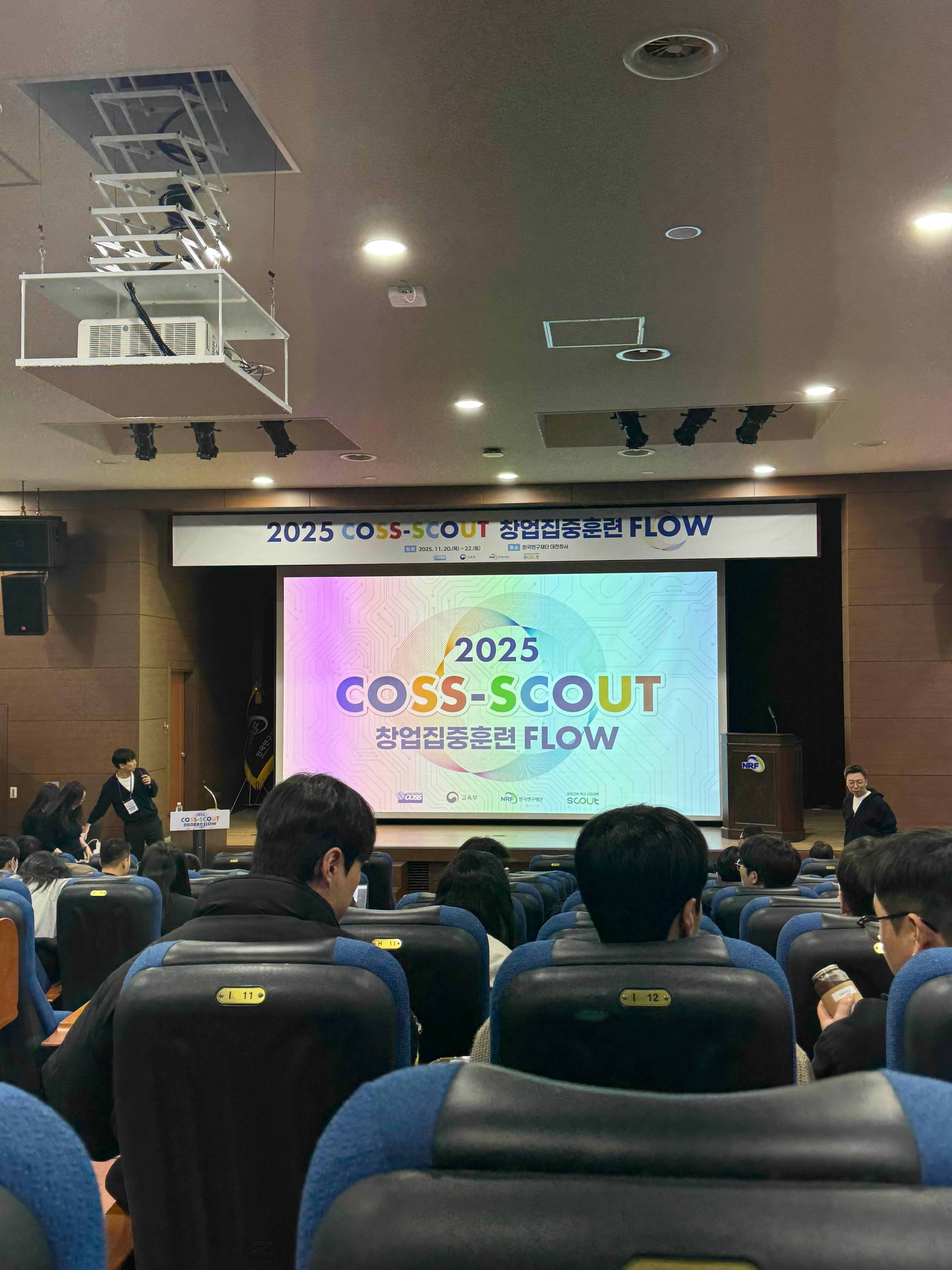
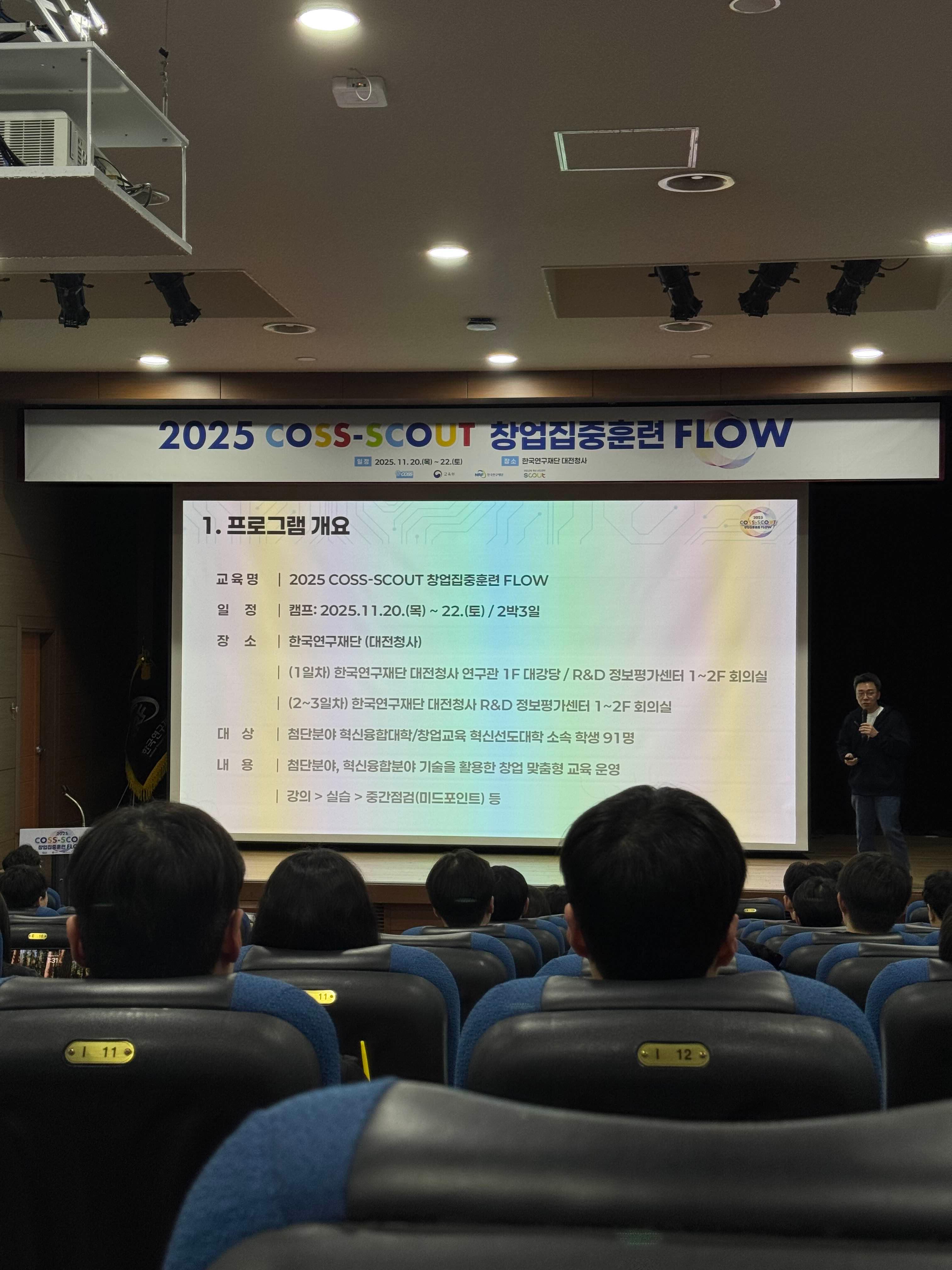

첫날 대전에 위치한 한국연구재단에 도착해 오리엔테이션 시간을 가졌습니다.
이후에는 멘토님들의 강의와 실습 시간을 번갈아 가지며 팀별로 아이디어를 디벨롭하는 시간을 가졌습니다.
항상 학교 안에서만 활동하고 대회에 참여하다가, 다른 학교에서 온 학생분들은 어떤 노력을 하고 있는지 공유하고 인사이트를 얻어갈 수 있는 좋은 기회라고 생각해 두근거리는 마음이었습니다.
다양한 곳에서 오신 쟁쟁한 멘토님들과 한국연구재단의 도움 아래에 시작되는 경진대회에서 많은 것을 얻어가고자 열정이 피어오르는 1일차였습니다.
On the first day, we arrived at the National Research Foundation of Korea in Daejeon and began with an orientation session.
After that, we alternated between lectures and hands-on workshops led by mentors, using the time to further develop our team’s idea.
Since I usually participate only in on-campus activities and competitions, it was exciting to finally meet students from other universities, learn what efforts they were making, and gain new insights from them. It truly felt like a valuable opportunity.
With the support of outstanding mentors from various fields and the National Research Foundation, the first day of the competition was filled with excitement and motivation as I set out to learn and achieve as much as possible.

첫날은 여러가지 아이디어들 중 하나를 선택하는 과정이었습니다.
멘토님들의 강의를 따라가며
- 고객의 문제에 집중하고
- '기술 창업'이 무엇인지, '딥테크'가 무엇인지에 대해 이해하고
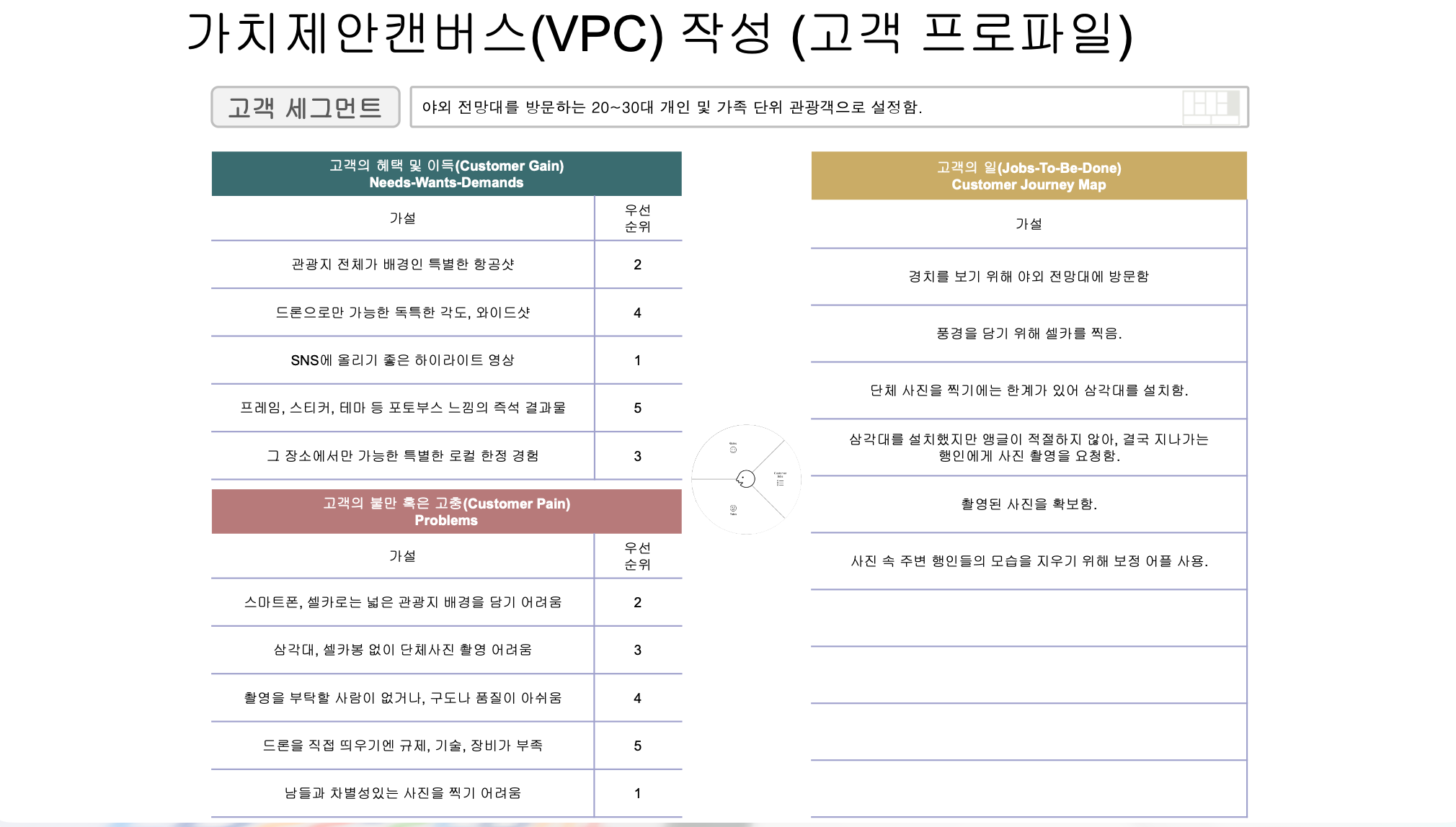
- 가치제안 캔버스와 비즈니스모델 캔버스를 그려가면서
아이디어의 기초를 쌓았습니다.
The first day was spent choosing one idea from the many possibilities we had.
Following the mentors’ lectures, we:
- Focused on understanding the customer’s problem,
- Learned what “technology-based entrepreneurship” and “deep tech” truly mean, and
- Built the foundation of our idea by working through the Value Proposition Canvas and the Business Model Canvas.
It was a day devoted to laying the groundwork for our concept.

첫날 진행하는 데에 가장 어려웠던 점은 처음 아이디어를 픽스하는 과정이었습니다.
여러가지 좋은 아이디어들은 너무 많은데 무엇이 가장 '경쟁력있을지'를 고민하고 비교하면서 최종 아이디어를 선별하는데 고심했습니다.
거의 10-20가지가 넘는 아이디어들을 하나씩 구체화시키고, 비즈니스 모델을 짜고, 경쟁사 및 유사서비스를 검색하면서 실전처럼 시뮬레이션을 돌리는 과정을 거쳤습니다.
끝없는 회의 끝에, 저와 제 팀은 '드론'에 관한 기술창업으로 마음을 굳혔고 이를 바탕으로 다음날 아이디어 디벨롭과 구체화에 들어가게 되었습니다.
The most challenging part of the first day was finalizing our initial idea.
There were so many great ideas, and we had to carefully consider and compare which one would be the most competitive before selecting our final concept.
We went through a process of fleshing out nearly 10–20 different ideas, building business models, and researching competitors and similar services, simulating the process as if we were in a real startup scenario.
After endless discussions, my team and I decided to focus on a technology startup related to drones, which then became the foundation for further idea development and refinement the following day.
2일차 11/21 Day2
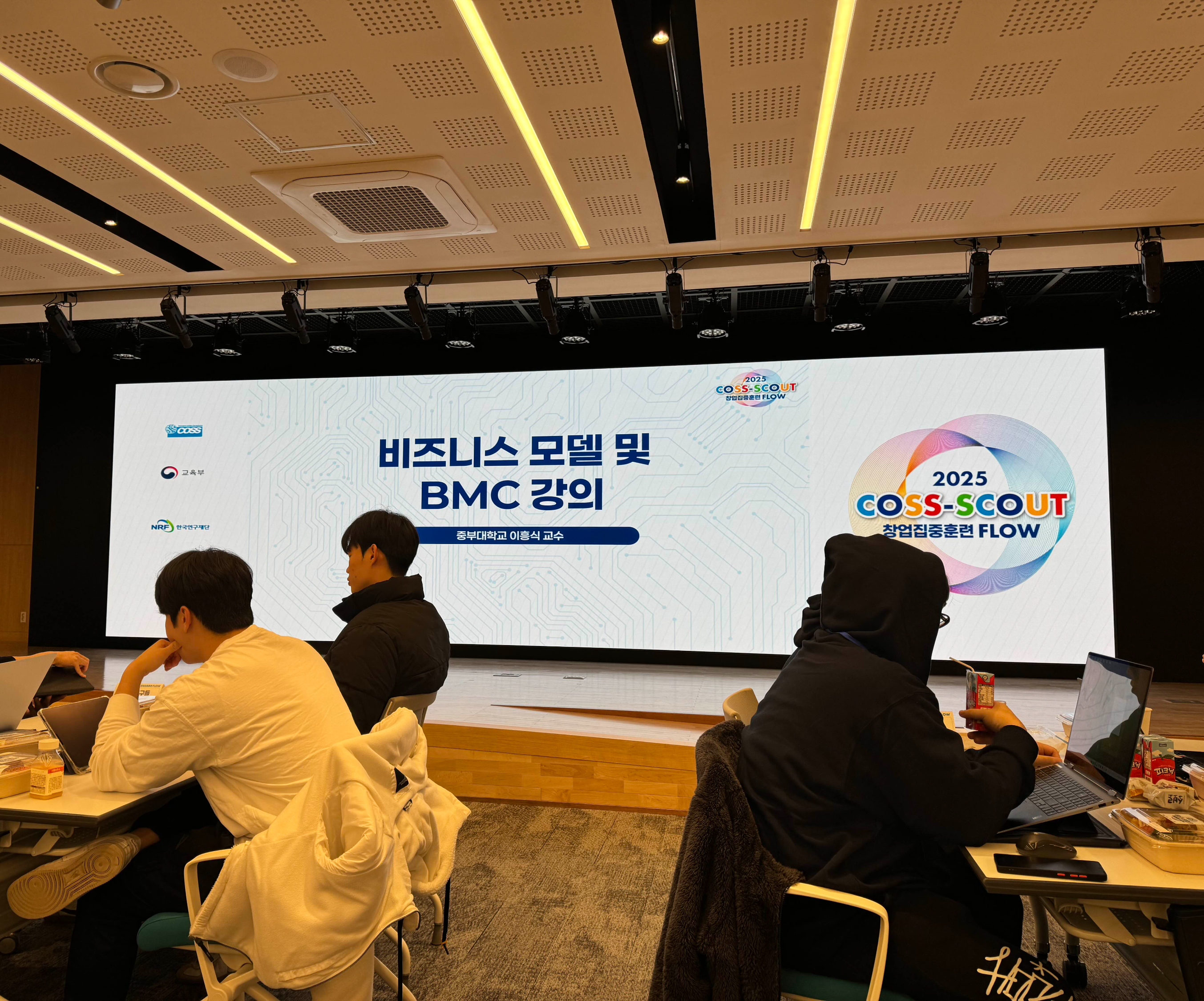
2일차가 밝았습니다.
2일차에도 강의와 실습을 오가며 아이디어를 구체화해나가는 과정을 거쳤습니다.
The second day dawned.
On this day as well, we continued refining our idea by alternating between lectures and hands-on workshops.


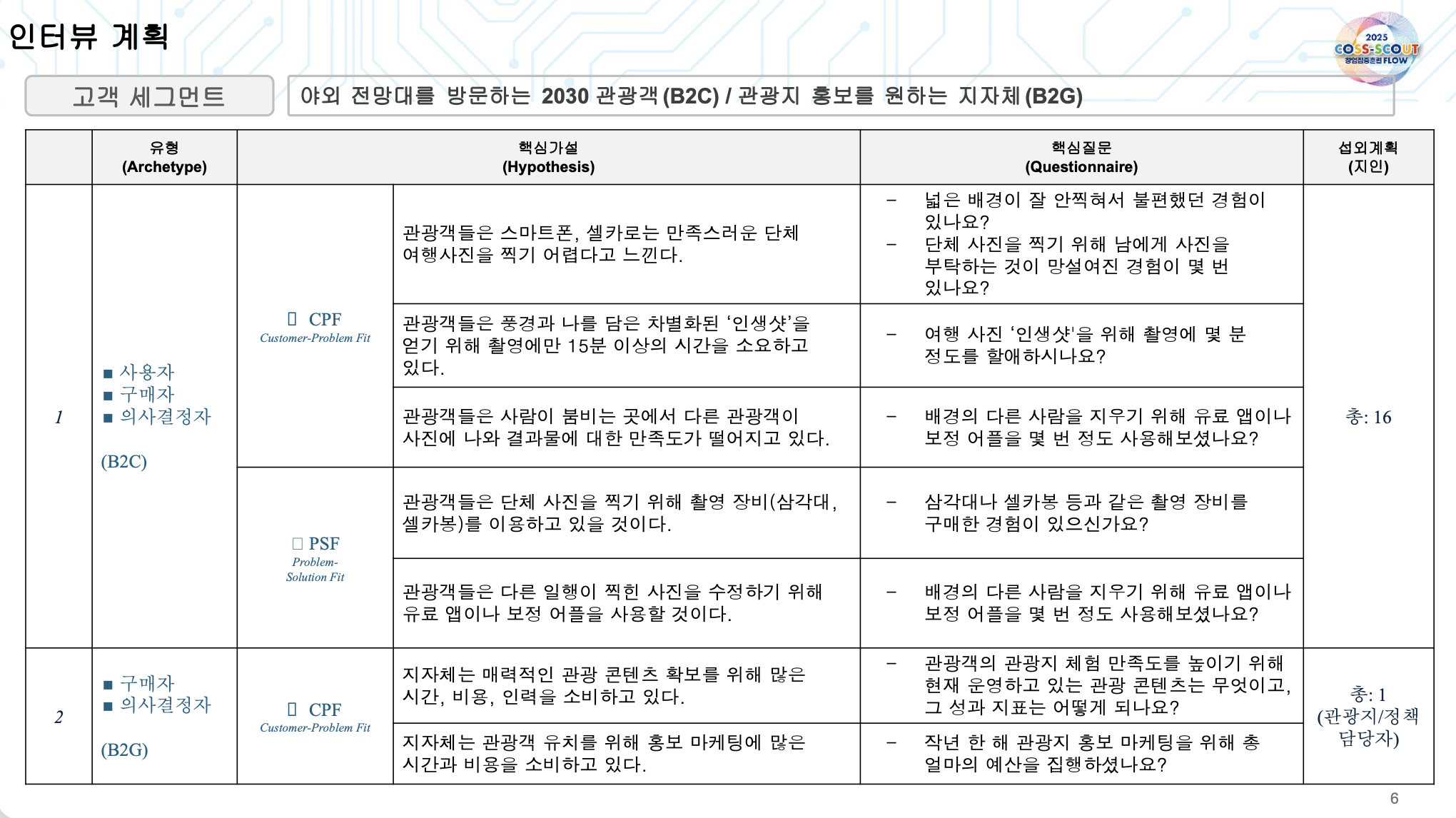
인터뷰를 통한 검증과 최종 피치덱 작성 방안을 배우며, 3일차에 있을 실전 인터뷰와 부산에서의 피칭에서 필요한 슬라이드를 제작하는 시간이었습니다.
인터뷰에서는 핵심가설을 토대로 핵심질문을 추출해 답변의 효용성을 최대화하는 과정에 대해 배울 수 있었습니다.
'사용자 중심' 서비스를 개발하기 위해서는 실제 사용자들의 목소리가 가장 중요하고, 여기서 다시 한번 사용자 중심 접근법을 바탕으로 서비스를 기획하는 시간이었습니다.
사진 촬영 제품을 기획하는 저희 팀은 관광객을 대상으로 단체사진을 찍을 때 필요한 삼각대/셀카봉 혹은 촬영 소요 시간 등에 대한 질문을 핵심으로 정했습니다.
관광객 외에 관광지 홍보를 원하는 지자체를 대상으로도 콜드 메일을 보내보고 싶다는 바람이 생겨, 지자체를 대상으로 관광지 홍보에 필요한 자원이나 인력에 대한 질문과 관광지 콘텐츠 확보 방안에 대한 질문을 뽑았습니다.
We spent this time learning how to validate our ideas through interviews and prepare the final pitch deck, creating the slides we would need for the hands-on interviews on Day 3 and the pitching session in Busan.
During the interviews, we learned how to extract key questions based on our core hypotheses to maximize the usefulness of the answers.
To develop a user-centered service, hearing directly from actual users is crucial. This session allowed us to plan our service again using a user-centered approach.
For our team, which was designing a photo-taking product, we focused on questions about the needs of tourists when taking group photos, such as tripods/selfie sticks and the time required for shooting.
Additionally, we wanted to explore reaching out to local governments looking to promote tourist attractions. We formulated questions targeting these authorities about the resources and manpower needed for promotion, as well as strategies for securing content for tourist sites.
3일차 11/22 Day3
이 날은 오전에 현장 인터뷰 + 오후 중간 평가 발표를 진행했습니다.
On this day, we conducted on-site interviews in the morning, followed by mid-term presentations in the afternoon.
부산 Busan
1일차 11/26 Day1
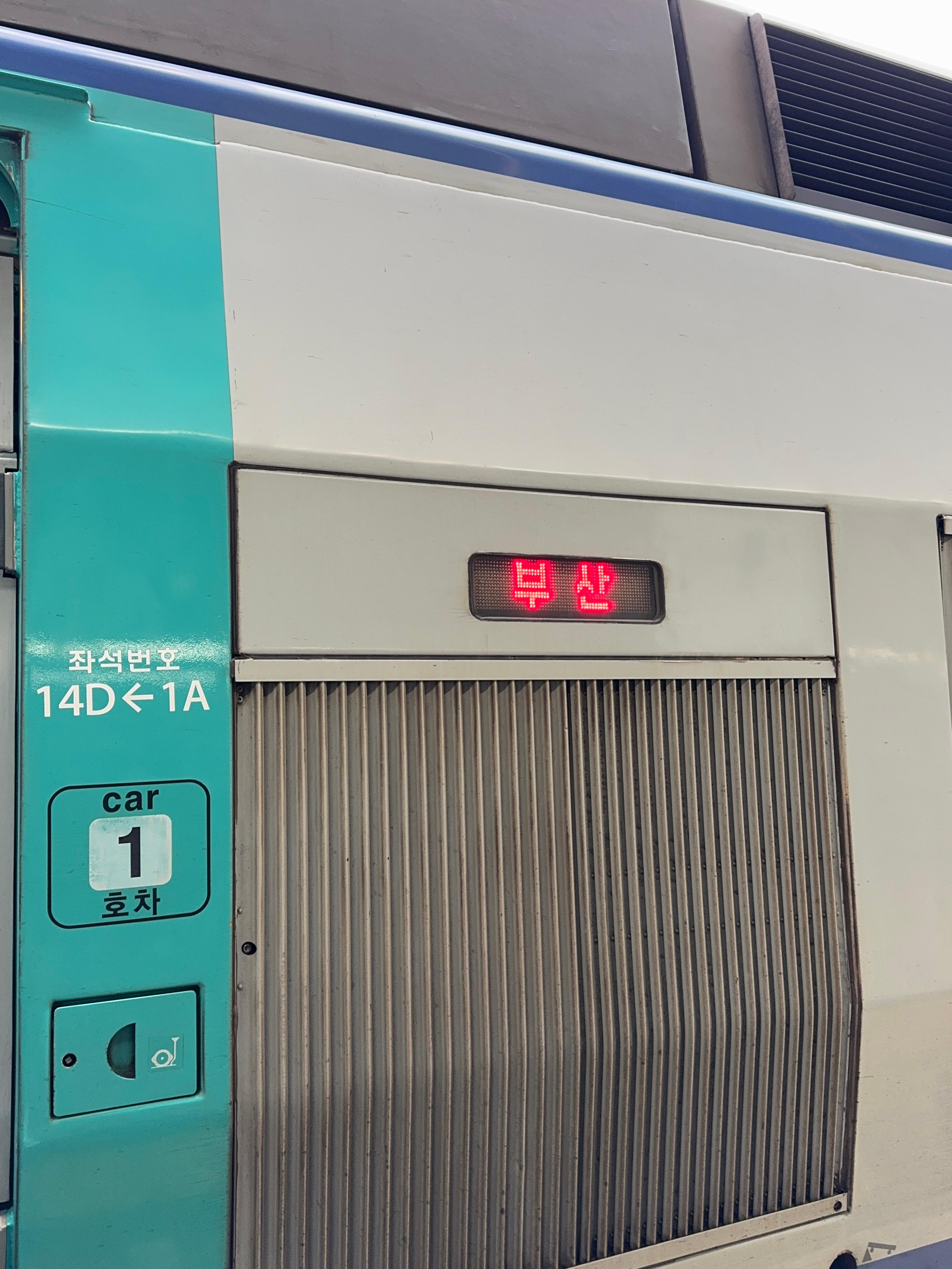

대전과 부산 사이, 5일 정도의 시간 동안 온라인 멘토링과 피치덱 디벨롭을 진행하고, 최종 발표 및 시상을 위해 부산으로 향했습니다.
Over the course of about five days, between Daejeon and Busan, we engaged in online mentoring and pitch deck development, then headed to Busan for the final presentations and awards ceremony.
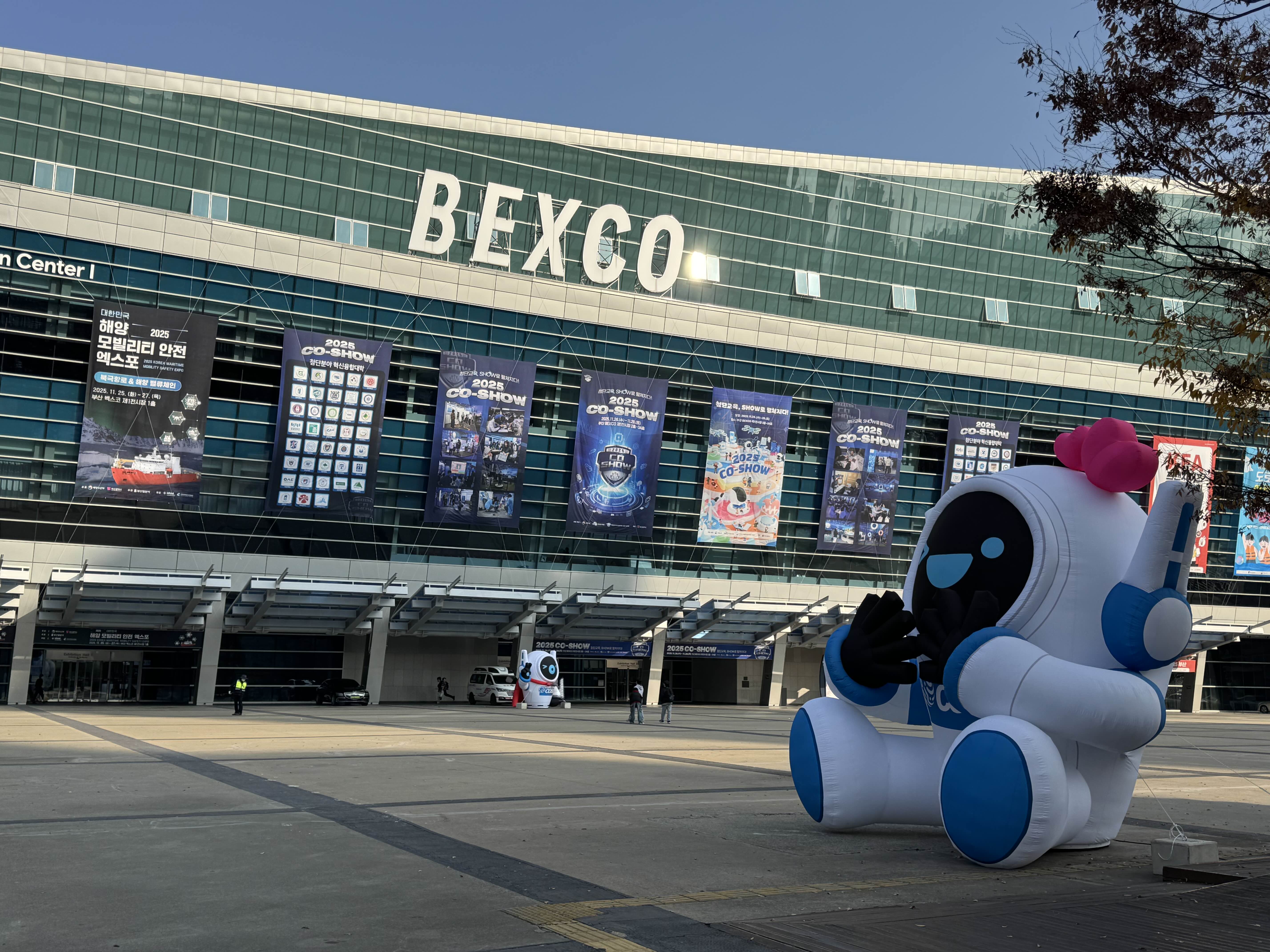
이번 Coss-Scout 창업경진대회는 부산에서 개최한 첨단교육 행사인 'Co-Show'를 통해 발표와 시상이 진행되었습니다.
덕분에 처음으로 부산 벡스코에서 행사 구경과 본무대 발표/질의응답 시간을 가질 수 있었습니다.
The presentations and awards for this Coss-Scout Startup Competition were held at “Co-Show,” an advanced education event hosted in Busan.
Thanks to this opportunity, I was able to visit BEXCO in Busan for the first time, explore the event, and participate in the main-stage presentation and Q&A session.


1일차는 지난 대전에서의 실습과 마찬가지로 팀별로 아이디어를 구체화시키고 피치덱을 완성하는 시간을 가졌습니다.
프로그램 내내, 주최 측에서 아침 점심 저녁 그리고 간식까지 넉넉하게 준비해주셔서 계속되는 회의에도 지치지 않고 임할 수 있었습니다! :)
On the first day, just like the training sessions we had earlier in Daejeon, each team spent time refining ideas and completing the pitch deck.
Throughout the entire program, the organizers generously provided breakfast, lunch, dinner, and even snacks, so we were able to stay energized and continue our discussions without feeling worn out! :)
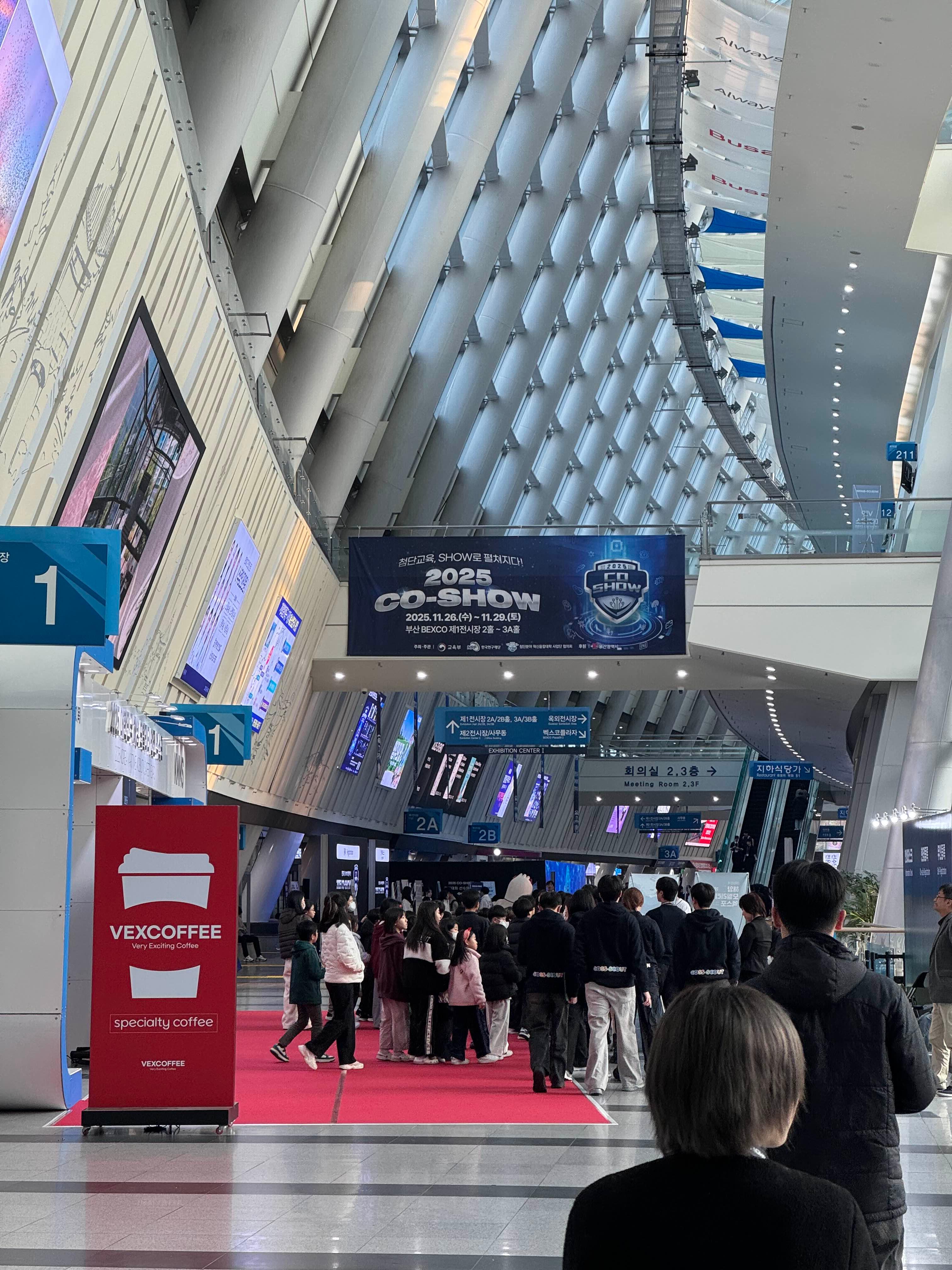

Co-Show는 전국의 첨단융합 기술을 개발하고 있는 여러 대학이 모여 각자의 개발 성과와 지식을 나누고 교류하는 자리입니다.
회의 중간에 1시간 정도 행사 탐방할 수 있는 시간을 주셔서, 저와 저희 팀도 여러가지 부스에 참여하며 행사를 즐기고 여러 인사이트를 얻는 기회를 가졌습니다.
Co-Show is an event where universities from across the country that are developing advanced convergence technologies gather to share their achievements, exchange knowledge, and network.
During the conference, we were given about an hour to look around the exhibition. My team and I took this opportunity to visit various booths, enjoy the event, and gain valuable insights from different projects and demonstrations.


제 모교도 참여하고 있는 파트인 '지능형 로봇' 분야에서 강아지 로봇을 만날 수 있었습니다.
엎드리기도 하고 하이파이브도 하는 모습을 보며, 외관이 강아지 같지가 않아도 이미 정말 강아지처럼 느끼고 있는 저를 보면서 반려 로봇의 보편화가 머지 않았다고 느꼈습니다.
또한, 자유자재로 움직이며 상호작용하는 로봇을 보며, 이런 자유도를 바탕으로 재난 시 인명구조에 사용되면 갖게 될 큰 가치에 대해 상상하게 되었습니다.
I had the chance to see a robot dog in the Intelligent Robotics section, one of the fields my Home university is also participating in.
Watching the robot dog lie down and give high-fives, I realized that even though it didn’t look exactly like a real dog, I was already perceiving it as if it were one. It made me feel that the widespread adoption of companion robots might not be far away.
Seeing how freely it moved and interacted, I also imagined the immense value such high-mobility robots could have in disaster situations, especially for search and rescue operations where agility and autonomous response are critical.
2일차 11/27 Day2
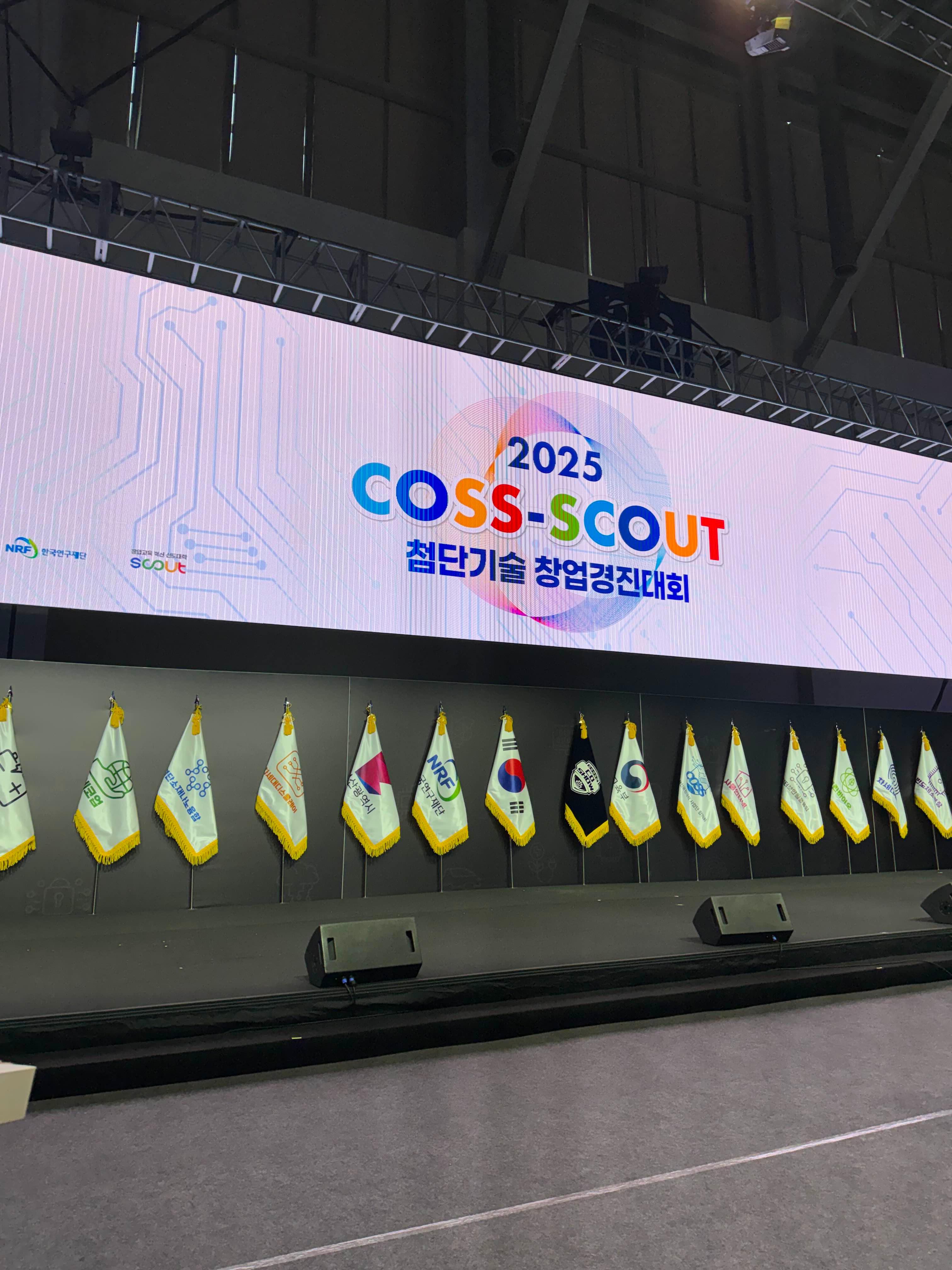

마지막 최종 피칭과 시상이 이루어지는 날이 밝았습니다.
매일 그렇듯 주최 측에서 준비해주신 간식을 받고 자리에 앉아 발표를 준비했습니다.
The final day of pitching and awards had finally arrived.
As always, we grabbed the snacks generously prepared by the organizers, settled into our seats, and focused on getting ready for the presentation.

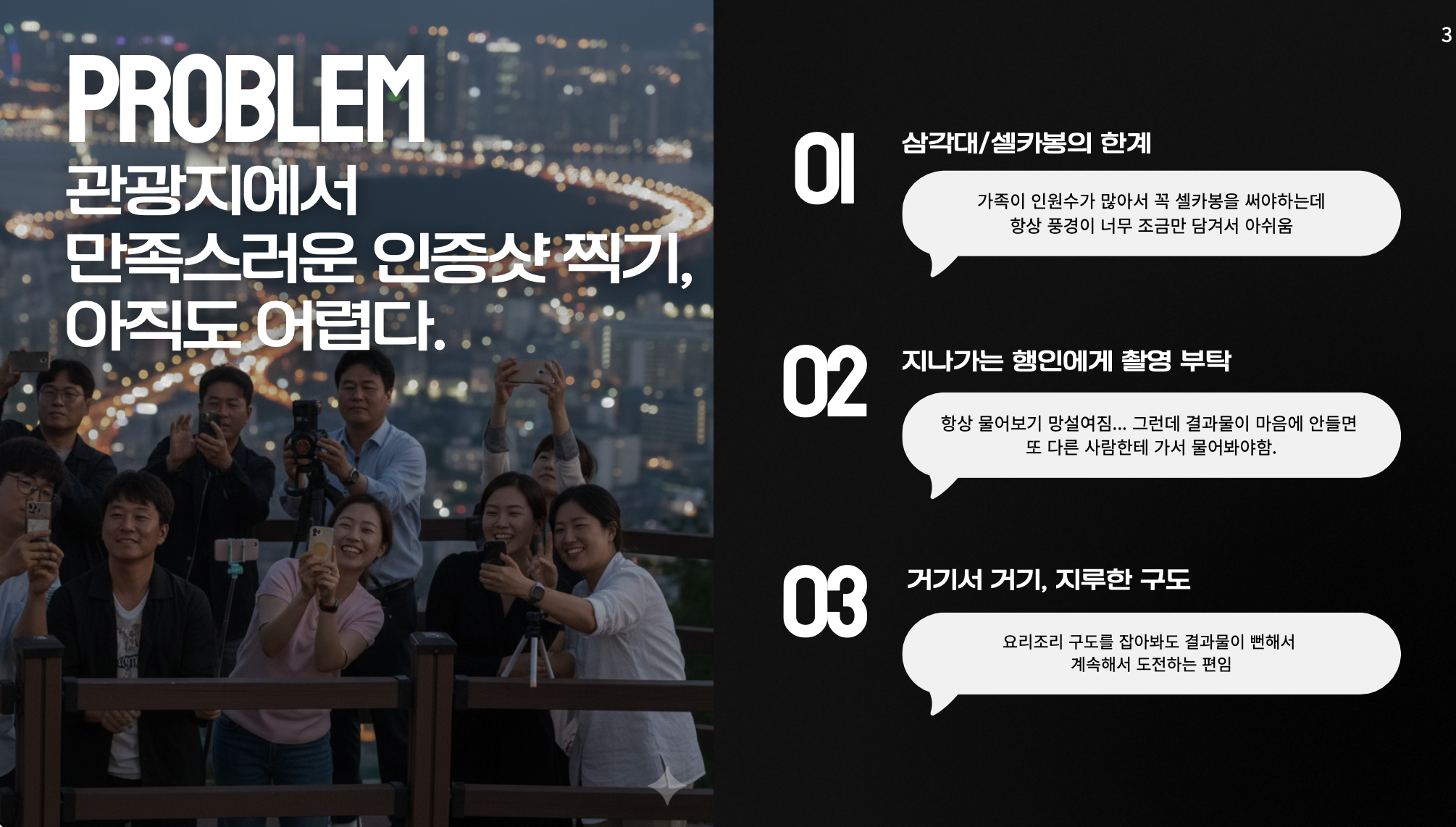
총 23개 팀이 참여한 만큼 시간은 질의응답을 포함해서 총 7분이라는 굉장히 짧은 발표 시간으로, 임팩트있는 전달력과 깔끔한 발표 진행이 중점적이었습니다.
저희 팀 또한, 헤드라인을 사용해서 강조할 점을 살리려고 노력했습니다.
2025년도 하반기 동안, 여러 번에 창업경진대회에 참여하면서 발표와 피치덱을 준비하는 경험을 쌓았는데, 아이디어와 기술만큼 중요한 것이 바로 피칭이라는 점을 다시 한번 깨달았습니다.
우리가 말하고자 하는 바와 강점 그리고 기대효과들을 매끄럽게 포장해서 심사위원 혹은 투자자들이 알아듣기 쉽도록 정제하는 과정은 창업에서 절대적이고, 어쩌면 개발만큼이나 중요한 단계임을 느꼈습니다.
배운 것이 있다면, 앞으로의 창업 경진 대회 참여에서는 아이디어 구체화 과정과 피치덱 디자인 과정만큼 말투, 말하기 속도, 단어, 걸음걸이이 등 '발표 순간' 그자체를 설계하는데 시간을 투자하고 고민해야겠다는 것입니다.
With 23 teams participating, each team was given only 7 minutes, including Q&A—an extremely short window. That meant our presentation had to be impactful, concise, and crystal-clear.
To make every second count, our team made a deliberate effort to structure the pitch around strong, memorable headlines that highlighted our key points effectively.
Throughout the second half of 2025, I participated in several startup competitions, gaining repeated experience in preparing presentations and pitch decks. Through this process, I realized once again that pitching is just as important as the service and the technology itself.
The process of packaging our message, strengths, and expected value in a smooth and refined way, so that judges or investors can easily understand the value, was absolutely essential. I came to understand that this stage is not only indispensable in entrepreneurship, but in some ways just as critical as the development phase.
In future competitions, I need to invest more time not only in shaping the idea and designing the pitch deck, but also in designing the presentation moment itself, including tone of voice, pacing, word choice, posture, and stage movement.


그렇게 총 5일 간의 준비과정과 마지막 발표를 끝으로 경진대회를 마무리했고, '우수상(2등)'이라는 좋은 성적을 거둘 수 있었습니다!
지난 대회와 비교하여, 이번 대회에서 좋은 성적을 거둘 수 있었던 이유를 스스로 분석해보았을 때 몇가지 지점을 발견할 수 있었습니다.
- 핵심 가설을 바탕으로 사용자가 느끼는 문제점(페인 포인트/니즈)을 정확히 파악하였다.
- 기획된 서비스를 뒷받침하는 기술적 근거와 설명이 충분했다.
- 짧은 시간 내에 발표의 임팩트와 전달력을 높이고, 질의응답에 대한 준비를 철저히 했다.
이번 프로그램에서의 성공 경험이 이번 남은 대회를 준비하는 데에, 그리고 제 미래의 커리어에도 도움이 되리라 믿으며,
앞으로 더 발전하겠다는 마음을 다지려 합니다.
After five days of preparation and the final presentation, we were able to conclude the competition—and proudly take home the Excellence Award (2nd place)!
Looking back and analyzing why we achieved such a strong result compared to previous competitions, I identified several key factors:
- We accurately identified user pain points and needs based on clear core hypotheses.
- We provided solid technical reasoning and explanations to support the proposed service.
- We maximized impact and clarity within the short presentation time and prepared thoroughly for the Q&A session.
I believe that the experience and success gained through this program will not only help me prepare for the remaining competitions this year but will also serve as a valuable foundation for my future career.
With that in mind, I am determined to continue improving and growing.
여기서 마치도록 하겠습니다. 긴 글 읽어주셔서 감사합니다.
다른 글에서 다시 뵈어요!
I’ll wrap it up here.
Thank you for reading this long post, and see you again in the next one!