안녕하세요. 2025 UIDC(University student International Diplomacy Conference)에 참여한 후기를 작성해보려고 합니다.
UIDC는 '국제정치외교 동아리 PAZ'에서 주최한 국제정치외교 컨퍼런스입니다.
저는 동아리 소속은 아니지만, 최근 국제정치 및 협력 개발에 관심이 생겨 사람들을 만나고 이야기를 나누어보고자 참여하게 되었습니다.
결론부터 말씀드리자면 용기와 시간을 내서 참여한 것이 잘한 선택이었다는 생각이 듭니다.
Hello. I'd like to share my experience participating in the 2025 UIDC (University student International Diplomacy Conference).
UIDC is an international politics and diplomacy conference hosted by the university club PAZ, which focuses on international relations and diplomacy.
Although I’m not a member of the club, I recently developed an interest in international politics and development cooperation, so I decided to take part in the conference to meet people and exchange ideas.
To sum it up, I believe taking the time and courage to participate was the right choice.
1일차 The First Day

참여만으로도 여러가지 기념품을 받을 수 있었습니다. 기획단에서 제작한 자료집과 책갈피, 티켓 등 굿즈와 커피믹스, 볼펜도 받았습니다.
특히 볼펜이 진짜 부드럽고 너무 잘써져서 제가 가지고 갔던 볼펜 내팽개치고 이거 썼습니다.
역시 수학문제를 풀려면 좋은 분필이 필요하듯, 공부를 위해서는 좋은 볼펜이 필요합니다 😋
Just by participating, I received a variety of souvenirs. The planning team prepared some great goodies like a printed booklet, bookmarks, tickets, coffee mix, and even a pen.
The pen was incredibly smooth and wrote so well that I ditched the one I brought and used this one instead.
It’s just like how you need good chalk to solve math problems — a good pen is essential for studying 😋
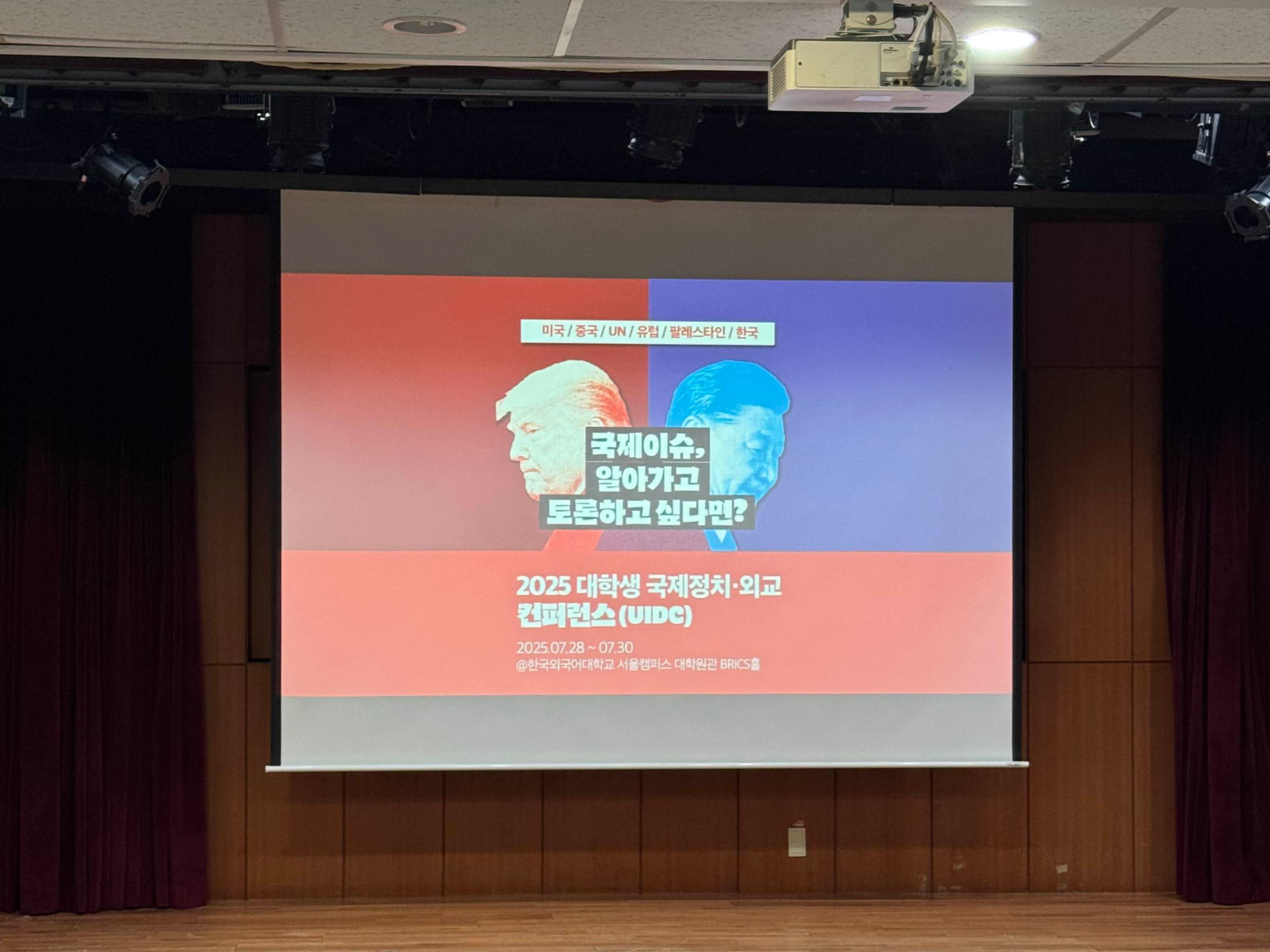
첫날이니만큼 기획단분들의 열정적인 오리엔테이션과 준비 각오를 들어볼 수 있었습니다. 저도 같이 기대가 되는 순간이었습니다.
Since it was the first day, we got to hear the planning team’s passionate orientation and their strong determination in preparing for the event. It was a moment that made me excited as well.

컨퍼런스는 한국외대에서 진행되었습니다. 오리엔테이션이 끝나고 조별로 점심을 먹으며 친해지는 시간을 가졌습니다.
The conference was held at Hankuk University of Foreign Studies. After the orientation, we had lunch in groups, which gave us a chance to get to know each other better.

1일차는 미국파트와 중국파트 두가지로 나누어졌습니다.
현재 가장 큰 두 강대국이라고 할 수 있는 두 나라의 경제 및 정치관을 배워볼 수 있는 시간이었습니다.
저는 중국을 선택했는데, 아무래도 현재 한국 사회에서 미국은 너무 친숙하고 다른 루트를 통해서도 배울 수 있을 거라는 생각에 중국을 배워보기로 했습니다. 그리고 '우리가 아는 중국은 진짜일까?'라는 발제에 대해서 공감했기 때문입니다.
한국은 역사적으로 지정학적으로 중국과 가까이 하고 있지만 그럼에도 중국에 대해서 잘안다는 혹은 많이 겪었다는 이유로 편견에 매몰되는 경향이 있다고 생각했습니다.
그래서 중국이 바라보는 중국은 어떤 나라일지, 중국의 근현대 발전과정과 가치관을 알아보고 싶었습니다.
Day 1 was divided into two parts: the U.S. session and the China session.
It was an opportunity to learn about the economic and political perspectives of the two biggest global powers today.
I chose to join the China session. Since the U.S. feels very familiar in Korean society, and I thought I could learn about it through other channels, I wanted to take this chance to explore China instead. I was also drawn to the session’s theme, "Is the China We Know the Real China?"
Historically and geographically, Korea has always been close to China. But I believe that familiarity often leads to bias that we assume we know enough or have experienced enough to understand, but that can create blind spots.
So I wanted to learn how China views itself, explore its path of modern development, and better understand the values that shape the country today.
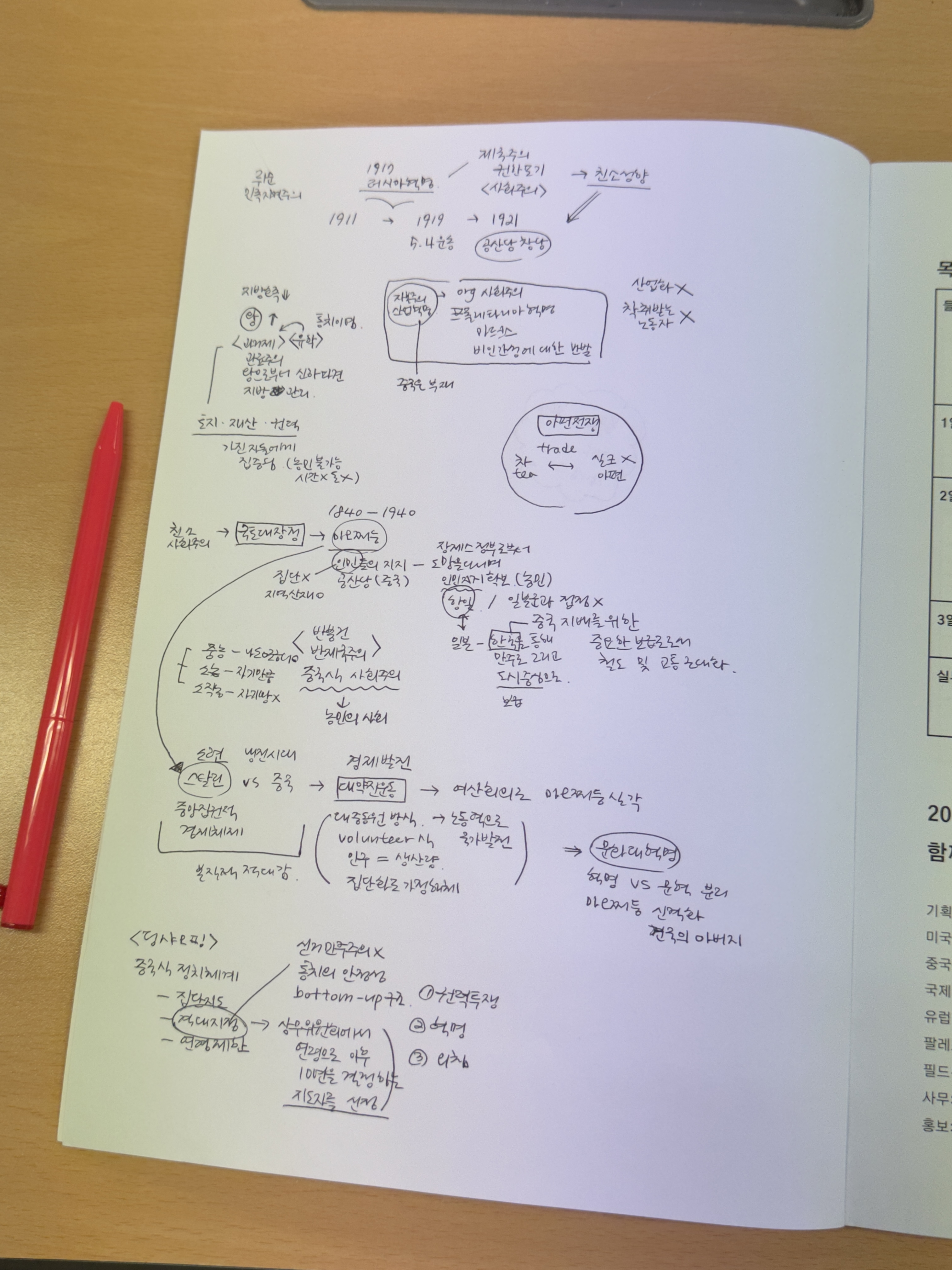

중국파트는 두 분의 교수님과 함께 했는데 1교시에는 중국 공산당의 탄생과 발전에 대해 배웠습니다.
현재 대한민국은 북한과의 관계로 인해 중국에 대한 부정적인 감정이 많습니다. 또한, 한국의 민주주의 역사 과정에서 공산주의와 사회주의는 악으로 분류되었던 시간이 있는 만큼 중국의 공산당과 사회주의 이념은 한국인들에게 그다지 흥미롭게 들리지 않을 수 있습니다. 아무래도 저는 그러한 지점에서 더 배워보고 객관적인 시각에서 바라보고자 했습니다.
첫시간을 통해 쑨원에서 시작해 장제스, 마오쩌둥의 공산당 창당까지 이어지는 큰 맥락을 알게 되었습니다.
The China session was led by two professors. In the first class, we learned about the birth and development of the Chinese Communist Party.
Due to South Korea's relationship with North Korea, there are many negative sentiments toward China. Additionally, during Korea’s own history of democratization, communism and socialism were often labeled as threats or evils. Because of this, the Chinese Communist Party and socialist ideologies may not sound very appealing or interesting to many Koreans.
For me, that was precisely why I wanted to learn more—from a more objective and informed perspective.
Through the first session, I was able to understand the broader historical context, starting from Sun Yat-sen, moving to Chiang Kai-shek, and eventually to Mao Zedong and the founding of the Communist Party.

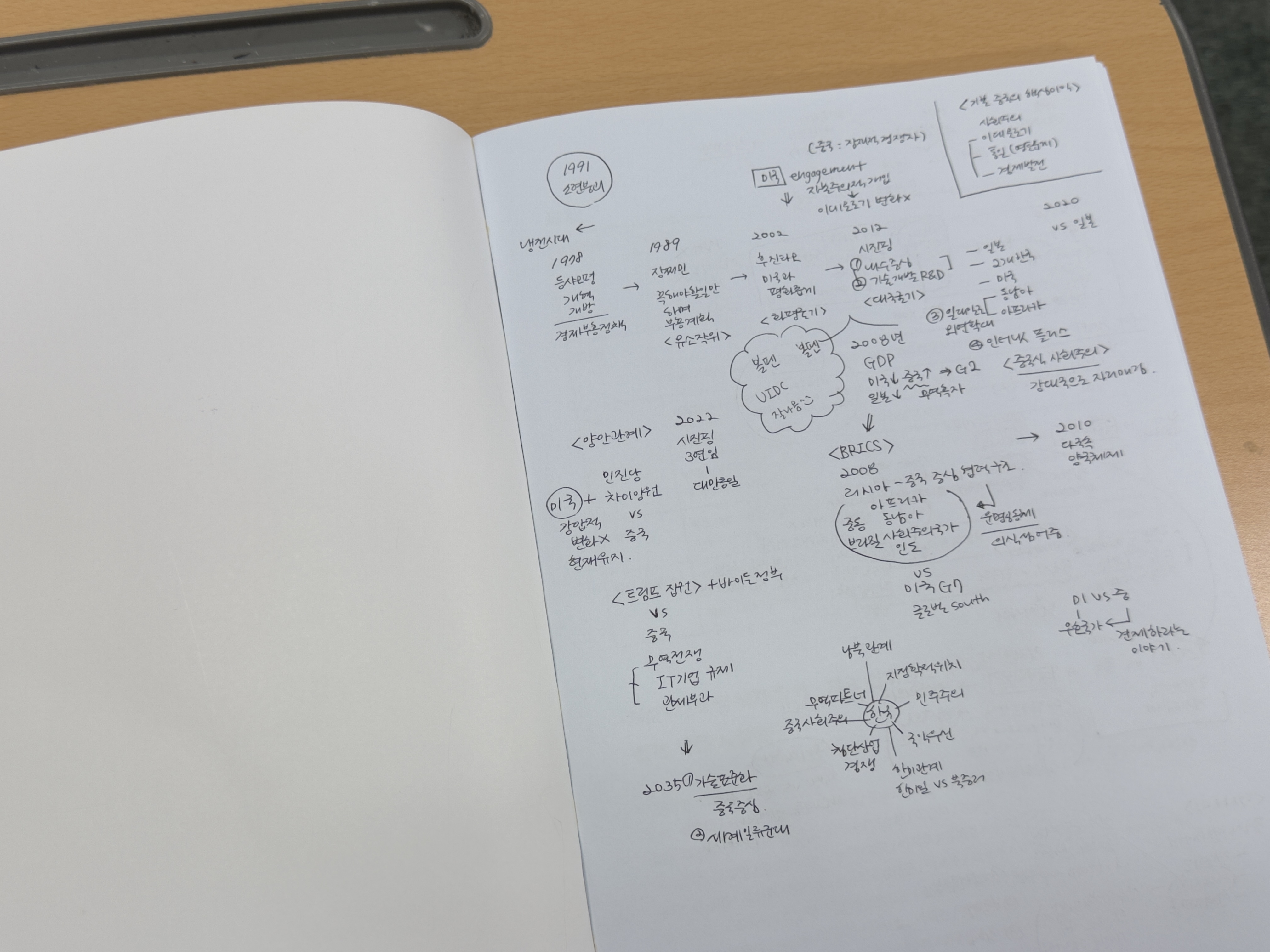
두 번째 시간은 덩샤오핑부터 현재 시진핑까지 현대 중국 정치에 대해 배우는 시간이었습니다.
1교시에 공산당 창당과 현재 중국의 정치 체제가 어떻게 이루어져있는지 그 피라미드 구조와 권력 안정화 방법에 대해 알게되었는데, 여기서 나아가 중국 내 정치 및 외교 목표와 국제 사회가 바라보는 (특히 미국) 중국에 대해서도 배웠습니다.
중국은 강력한 중앙 통치 시스템을 이용해 제1강대국으로 도약하려는 정치적 야망을 품고 있습니다.
첨단산업에 대한 막대한 투자와 값싼 노동력을 바탕으로 이미 중국은 어느정도 자신들의 목표치를 달성했습니다. 제가 중국파트를 듣고 싶었던 이유도 딥시크와 화웨이 로봇으로 이어지는 엄청난 기술 성장이 있었기 때문입니다.
The second session focused on modern Chinese politics, covering the period from Deng Xiaoping to the current leadership of Xi Jinping.
In the first session, I learned about the founding of the Communist Party and the current political structure of China—its pyramid-shaped hierarchy and how political stability is maintained. Building on that foundation, the second session explored China’s internal political and diplomatic goals, as well as how the international community—especially the United States—views China.
China has strong political ambitions to become the world's leading power, backed by a highly centralized government system.
With massive investments in high-tech industries and a vast supply of low-cost labor, China has already made significant progress toward its national objectives. One of the reasons I was particularly interested in the China session was because of the country’s astonishing technological advancements—especially in companies like DeepSeek and Huawei Robotics.
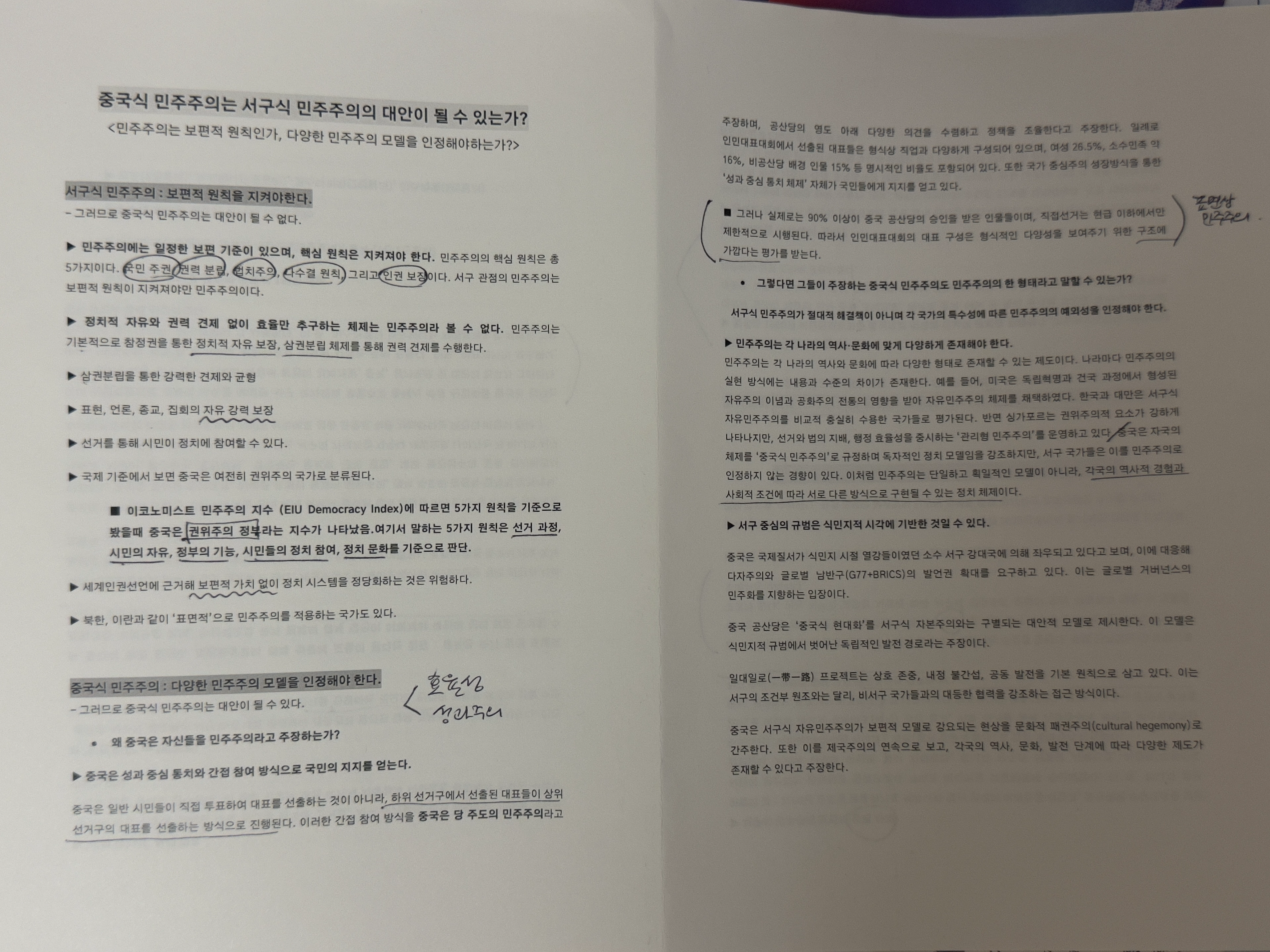
강연이 종료된 후에는 토론시간이 이어졌습니다. 두가지 주제에 대해서 토론과 토의를 진행했습니다.
'중국식 민주주의는 서구식 민주주의를 대체할 수 있는가' 그리고 '일본처럼 미국과 협력해야 할 것인가, 한국식 전략을 택할 것인가'
첫번째 주제는 토론 방식으로 중국식 민주주의와 서구식 민주주의 두가지 입장으로 나뉘어 진행되었습니다.
가장 흥미로웠던 점은 각각 2라운드로 진행해서 처음 입장과 반대되는 입장의 발언까지 해보면서 두가지 모두의 의견을 공감해보고 장단점을 찾아가는 방식이었습니다.
중국이 발전해 온 과정을 보았을때 정부 집중 개발 사업을 통해 국민(혹은 인민)들을 잘 살게 하는 방향이 무조건적으로 나쁜 것은 아니지 않냐, 그것이 실질적으로 사람들에게 더 도움이 되고 경제적으로 풍요롭게 한다면 대안으로 삼을 수 있지 않을까 하는 것이 중국식 민주주의였고, 경제적 발전이 있더라도 민주주의의 가치를 저해하는 것은 분명하고 국민 주권이나 인권 보장이 지켜지지 않는 것이 뻔한 사실이다라는 것이 서구식 민주주의의 입장이었습니다.
제 개인적인 견해로는 중국식 민주주의가 전문가 집단을 중심으로 하는 효율적이고 효과적인 방법이 될 수는 있겠다는 생각이 들지만, 한편으로는 그것이 어떤 희생으로부터 탄생했는지에 대한 깊은 이해와 헤아림이 있어야하지 않을까 하는 생각입니다.
After the lecture, we moved on to the discussion session. We had debates and group discussions on two main topics: 1. Can Chinese-style democracy replace Western-style democracy? 2. Should Korea cooperate with the U.S. like Japan, or pursue its own strategy?
The first topic was set up as a formal debate, with participants split into two sides representing Chinese and Western democratic models.
What made it particularly interesting was that we did two rounds, and in the second round, we had to argue for the opposite viewpoint of the one we initially supported. This helped us understand both perspectives more deeply and explore the strengths and weaknesses of each.
Those advocating for Chinese-style democracy argued that, looking at China’s development, a government-led model can effectively improve citizens' lives through large-scale centralized projects. If that model leads to actual improvements in people’s livelihoods and economic prosperity, perhaps it can be seen as a viable alternative.
On the other hand, the Western democracy side argued that no matter how much economic growth there is, it should never come at the cost of fundamental democratic values like civil rights, human dignity, and sovereignty of the people.
Personally, I came to think that Chinese-style democracy may offer an efficient, expert-driven approach. However, I also believe it’s important to deeply consider and understand the human cost or sacrifices that such a model might entail.
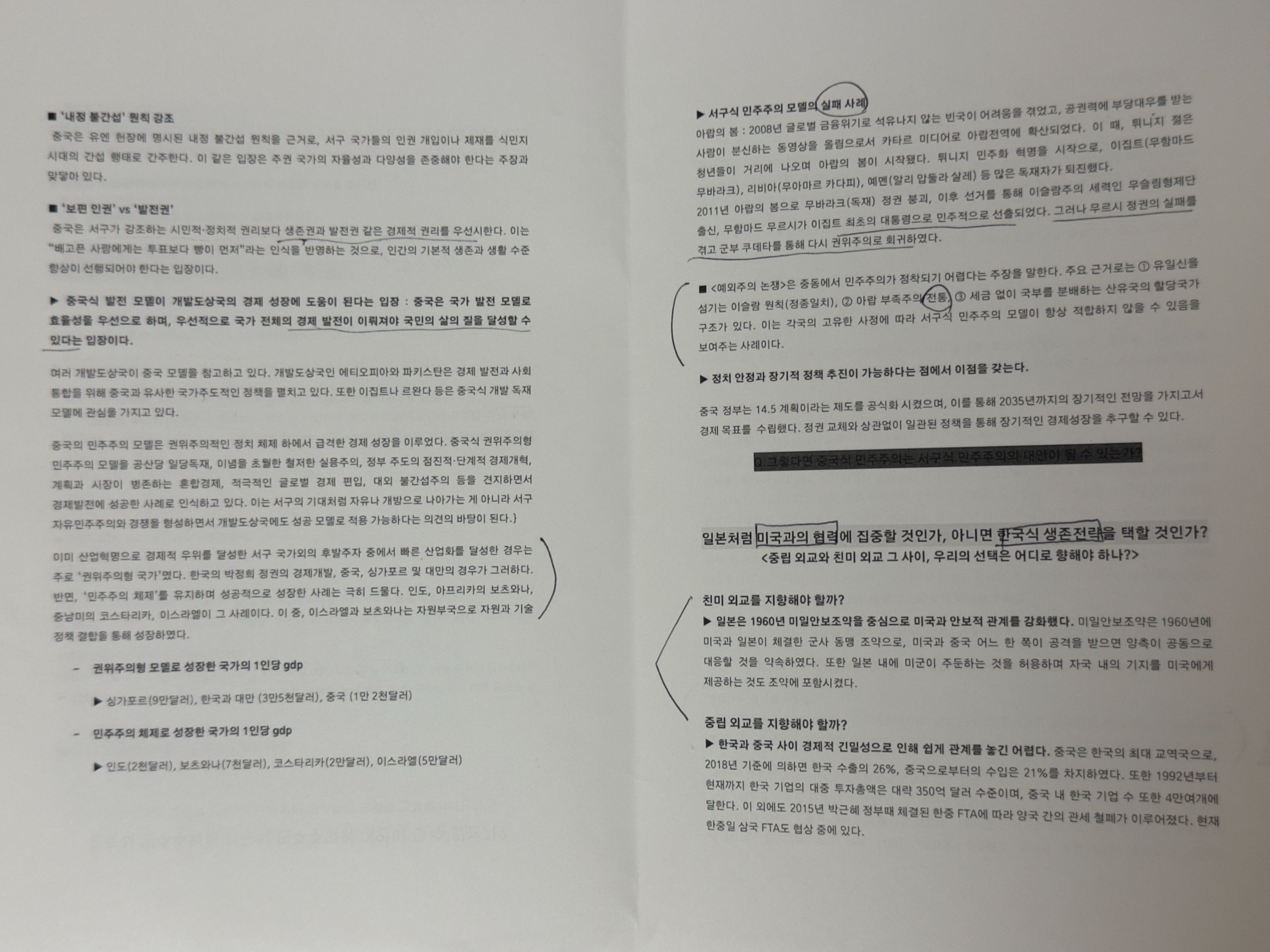
두번째로는 친미외교를 택할 것인지 중립외교를 택할 것이에 대한 토의 시간이었습니다.
한국의 정치를 담은 내용이라서인지 모두들 한쪽 방향으로 이야기가 쏠렸습니다. 일본과 같은 친미외교보다는 중립외교를 지키는 것이 한국에게 좋을 것이라는 것이죠. 그러나 사실 제 생각에서도 토의과정에서도, 어느 한쪽을 고르지 않는 것 또한 또 다른 결과를 낳을 수 있다는 점을 간과해서는 안됩니다. 미국이든 중국이든 모두 자신의 편에 서기를 바라니깐 말이에요.
현 상황에서는 각 맥락과 상황에 따라 자연스럽고 전략적인 외교가 이루어져야 하지만, 이러한 선택의 기로에 서 있는 것조차도 한국이 국제적으로 힘이 부족하기 때문이지 않나하는 아쉬운 현실을 마주했습니다.
The second discussion focused on whether Korea should pursue a pro-U.S. diplomatic strategy or maintain a more neutral stance.
Perhaps because it was a topic directly tied to Korean politics, the conversation leaned heavily in one direction. Most participants agreed that, rather than following Japan’s example of aligning closely with the U.S., it would be better for Korea to maintain a neutral diplomacy.
However, both during the discussion and in my own thoughts, I felt it was important not to overlook the fact that choosing not to choose a side could also lead to its own set of consequences. After all, both the U.S. and China want Korea to take their side.
Ideally, diplomacy should be carried out flexibly and strategically, depending on the situation and context. But the very fact that Korea is caught at a crossroads like this reflects an unfortunate reality: Korea may still lack enough influence on the international stage.
2일차 The Second Day
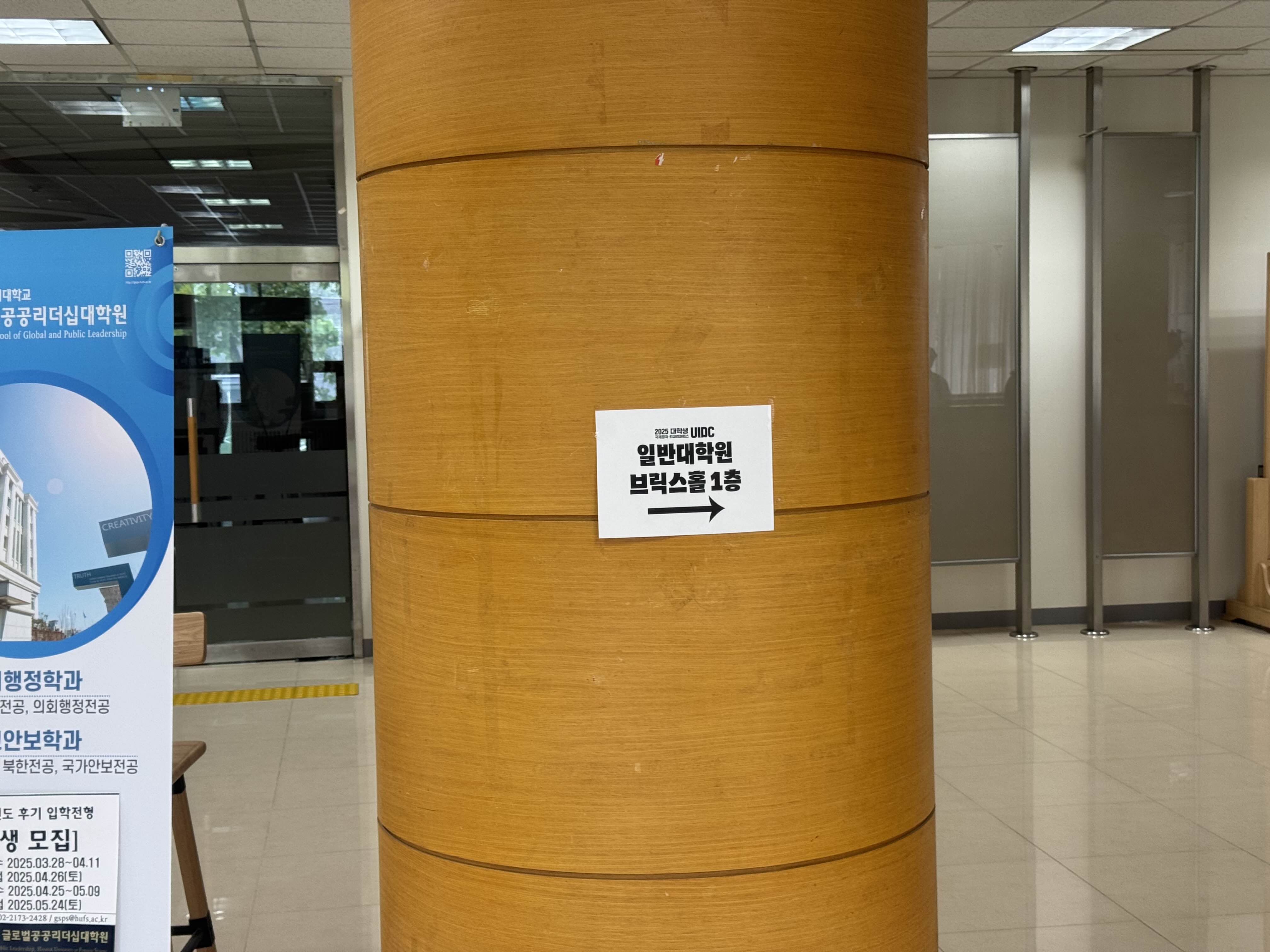

UIDC는 총 3일차에 걸쳐서 진행되지만 저는 오늘 토론을 끝으로 총 2회 수강으로 마무리하려 합니다.
2일차에도 한국외대를 찾았습니다. 점심을 먹으러 가는 길인데, 사진은 평화로워 보이는데 실은 진짜 더웠어요. 🔥
UIDC spans a total of three days, but I’ve decided to wrap up my participation after attending two sessions, with today’s discussion marking the end of my involvement.
I visited Hankuk University of Foreign Studies again for Day 2. On the way to lunch, I took this photo. It may look calm and peaceful, but in reality, it was incredibly hot outside! 🔥
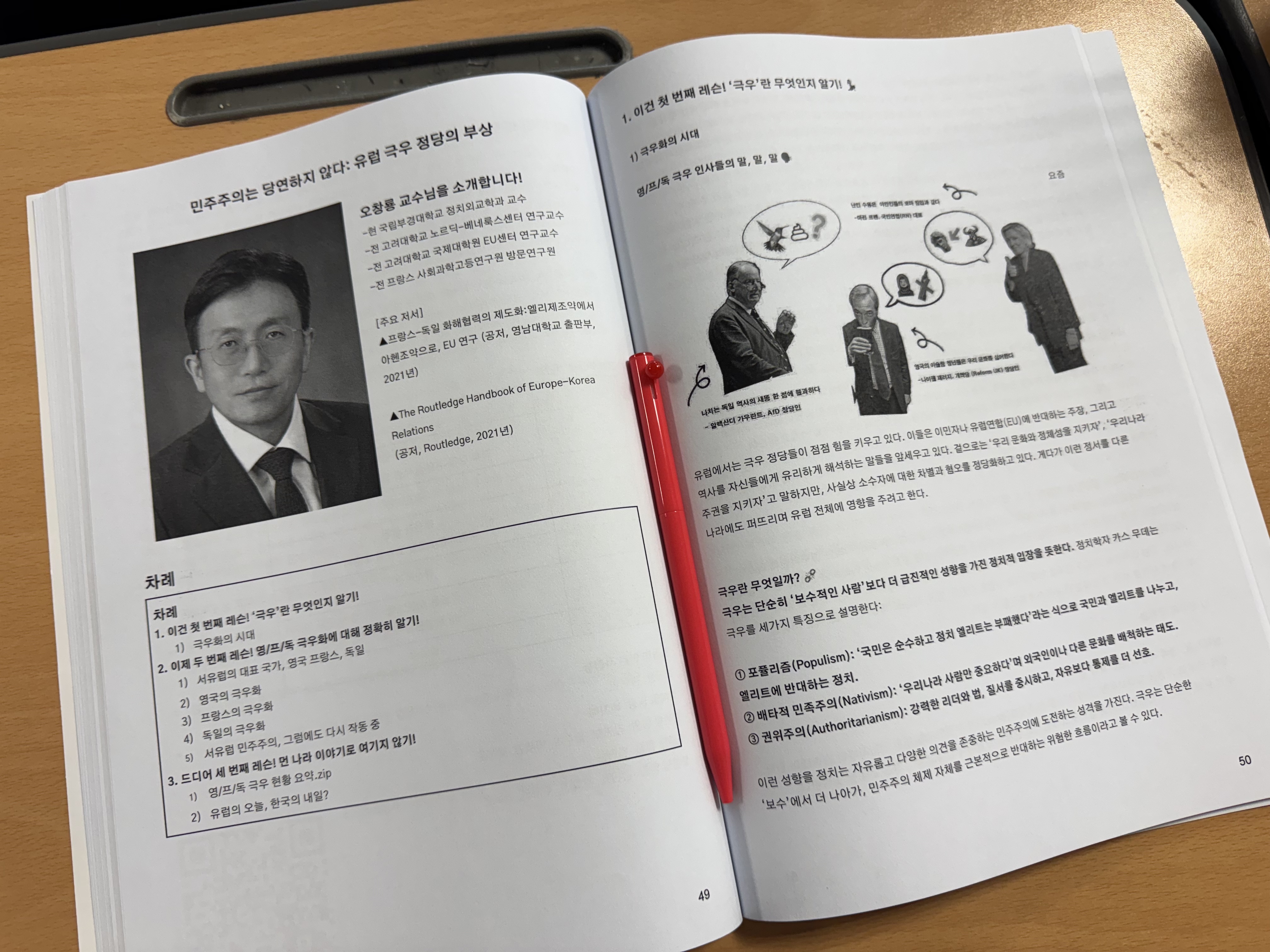
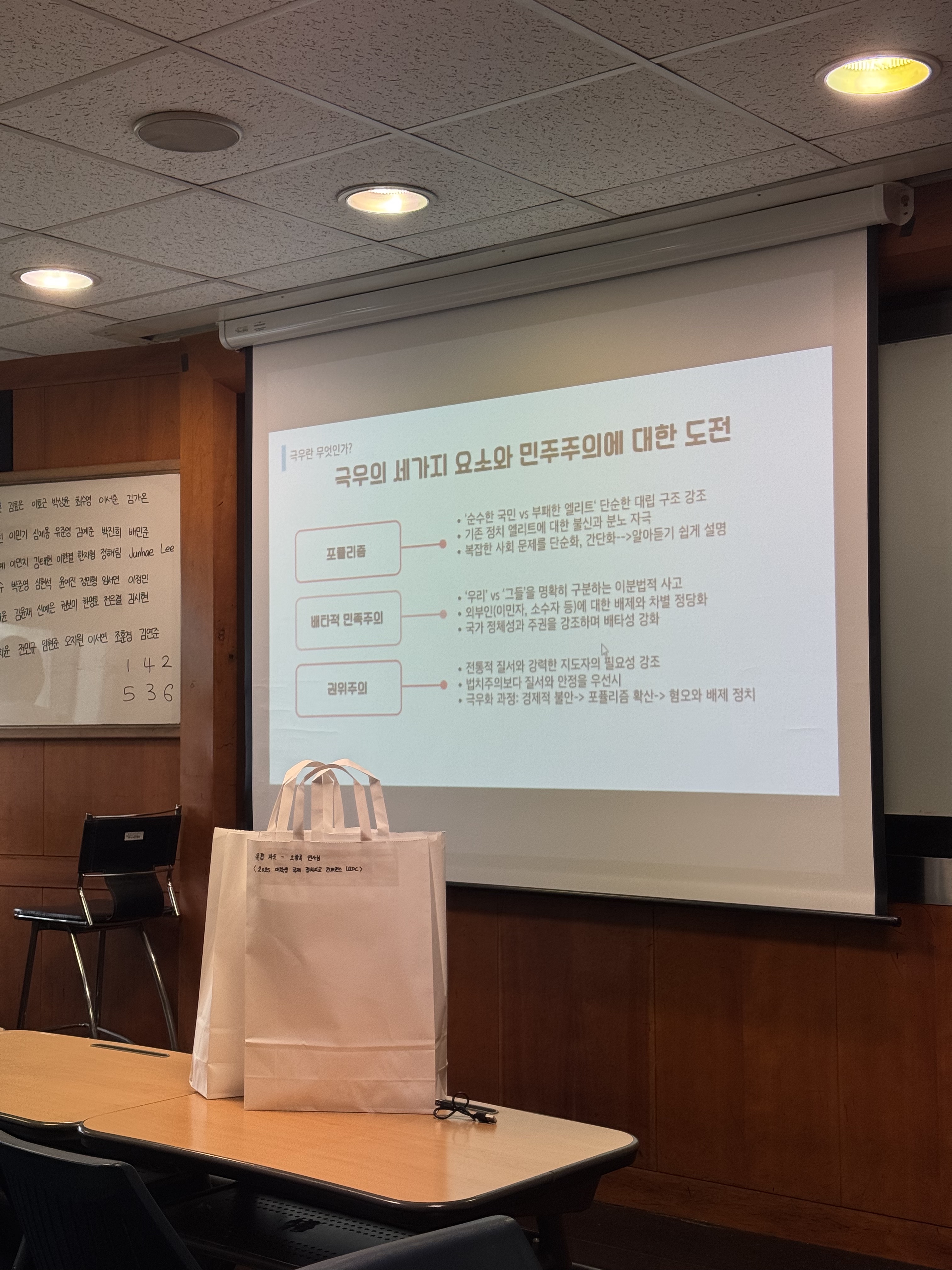
2일차 주제는 UN 국제기구, 유럽, 팔레스타인 3가지로 나뉘었습니다. 그중에서 저는 유럽파트를 선택했습니다.
세 가지 모두 다 재밌어 보여서 고민을 많이했는데 유럽파트에 발제가 '유럽 내 극우정당의 약진'에 대한 이야기를 담고 있어서 유럽파트로 최종 결정하게 되었습니다.
작년 네덜란드로의 교환학생 경험 이후 유럽 내의 문제에 대해서 직접적으로 느끼는 순간이 있었습니다.
제가 느꼈던 가장 큰 두가지 문제가 바로 극우정당과 난민 및 이민자 문제라고 생각했는데요, 이번 기회에 그 배경과 발전과정을 알 수 있을 것 같아 기대가 됐습니다.
The theme for Day 2 was divided into three topics: UN & international organizations, Europe, and Palestine. Among them, I chose the Europe session.
All three sounded interesting, so it took me a while to decide, but I was ultimately drawn to the Europe track because the presentation topic focused on “The Rise of Far-Right Parties in Europe.”
During my exchange program in the Netherlands last year, I had firsthand exposure to some of the pressing issues within Europe.
The two issues that stood out to me the most were the rise of far-right parties and the refugee and immigration crisis. So I was really looking forward to this session as a chance to understand the historical background and development of these challenges.
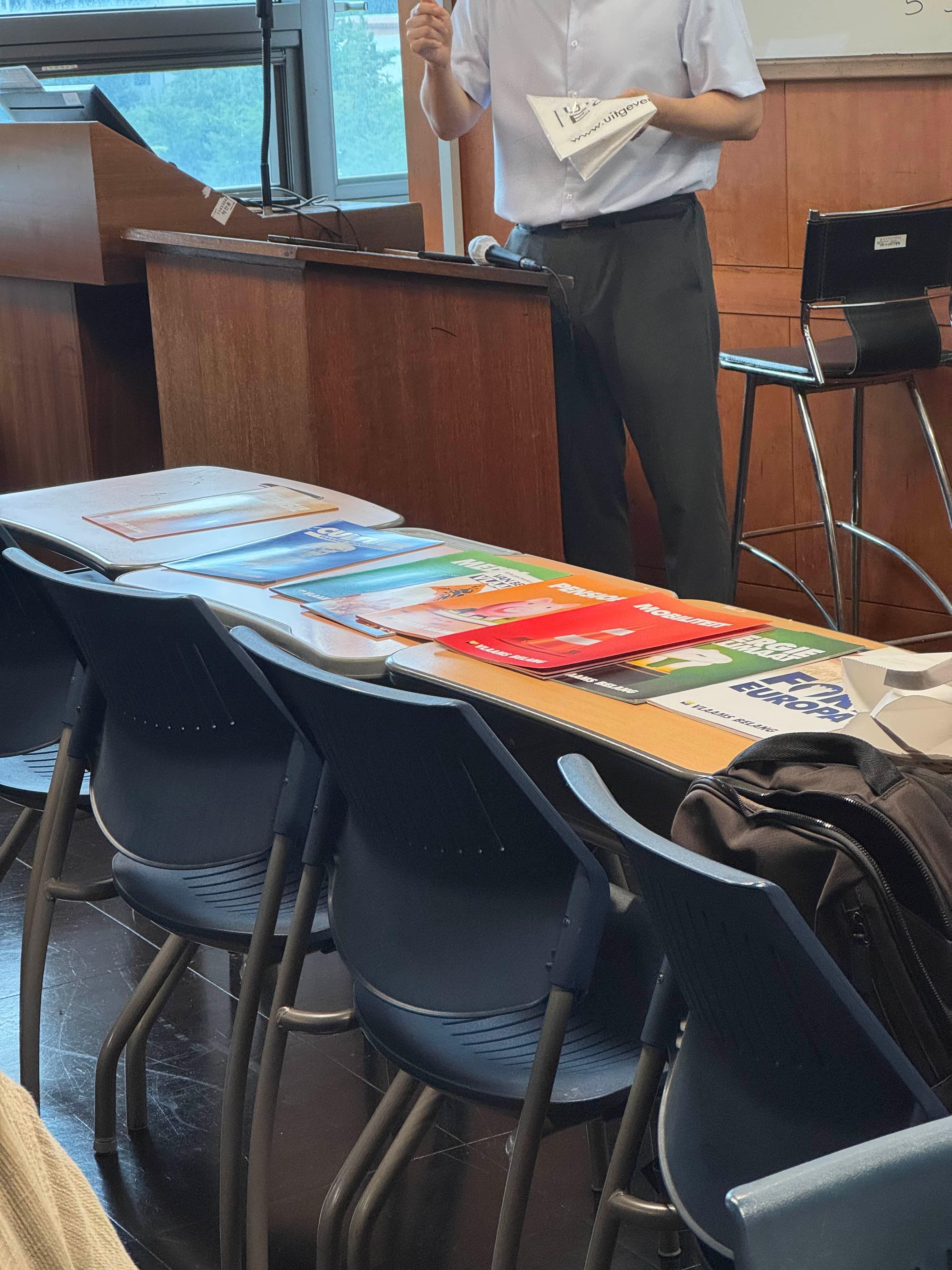
2일차 강연은 한 분의 교수님이 2시간 강연을 해주셨는데 사실 시간 가는줄 모르고 듣게 되었습니다.
직접 벨기에 내의 극우정당 사무실에 가서 가져오신 여러가지 팜플렛을 구경했습니다. 네덜란드어로 쓰여있어서 무슨 소리인지는 하나도 모르겠지만 현재 극우정당이 기존의 전통적이고 오래된 이미지에서 벗어나려고 한다는 것은 알 수 있었습니다.
젊은 정치인을 앞세워 이미지를 쇄신하고, 백인 및 중산층을 넘어서 노동자 계층을 타겟팅하고 있습니다. 이는 기존 정치에 싫증과 권태를 느낀 사람들을 공략하며 표수를 모으고 있었습니다.
마치 영국 드라마 <이어즈 앤 이어즈>를 보는 듯한 느낌이 들었습니다. 해당 드라마에 나오는 정치인 비비언 룩도 극우정당이지만, 기존 정치인이라면 하지 못할 조금은 파격적인 행동과 발언으로 점점 힘을 키워갑니다. 사회적으로 경제적으로 불안함을 느끼는 사람들의 마음을 노리고 그들의 본능적인 이기심을 자신들의 표로 바꾸는 극우정당의 전략과 미래를 보는 듯 했습니다.
On Day 2, we had a two-hour lecture by one professor, and honestly, I didn’t even realize how quickly time passed.
He showed us various pamphlets he had personally collected from far-right party offices in Belgium. Although they were written in Dutch (so I couldn't understand a word!), it was clear that these parties are actively trying to move away from their traditional, outdated image.
They are rebranding with younger politicians and shifting their target audience beyond the typical white middle class to include the working class. This approach seems to appeal to people who are disillusioned or fatigued by mainstream politics, helping far-right parties gain broader support.
It reminded me of the British drama <Years and Years>. In that show, the far-right politician Vivienne Rook gains popularity through bold statements and actions that traditional politicians wouldn’t dare try. Watching this lecture felt like witnessing a real-world version of that — far-right parties tapping into people’s fear and insecurity, turning their instincts into votes.
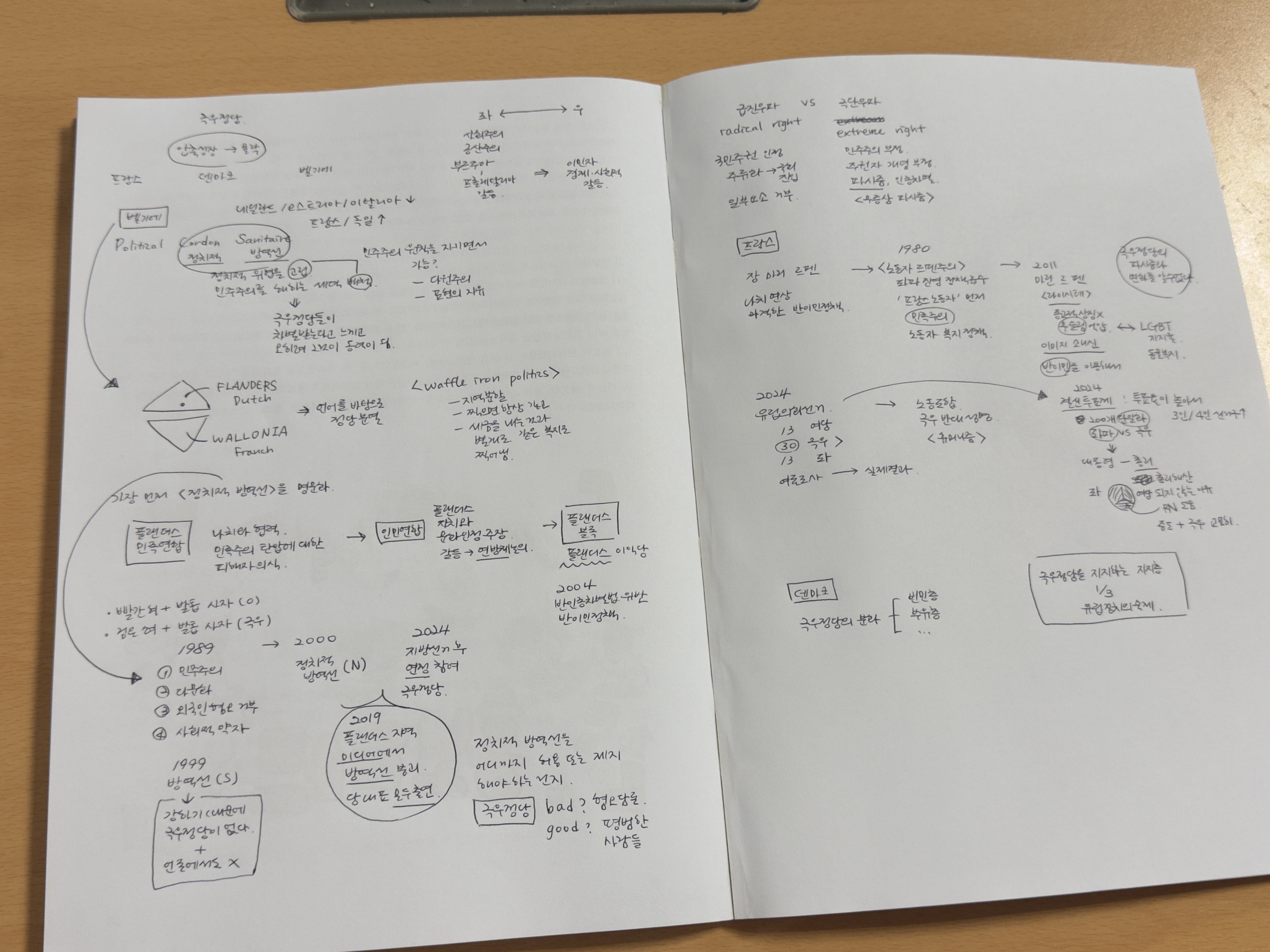
강의를 들으면서 정치 권력의 형성과 좌우 대립에 대해 알게 되는 시간이었습니다.
강연을 듣는 다양한 학생들의 이야기와 질문이 모여서 더 풍성한 수업을 만들었던 것 같습니다.
특히 이번 강연에서는 유럽 내 극우정당과의 접점을 끊기 위한 '정치적 방역선'에 대한 내용이 주를 이루었는데, 극우정당에 대한 소외와 배척 자체가 다시 그들로 하여금 피해자 의식을 가지고 성장히기 위한 동력이 될 수도 있고, 따돌리는 것 자체가 민주주의에 위배될 수 있다는 점도 있어서 굉장히 복잡한 문제였습니다.
Listening to the lecture gave me insight into how political power is formed and how the divide between the left and right takes shape.
I think it was the stories and questions from fellow students that really enriched the session — their diverse perspectives helped deepen the discussion.
One of the main topics was the idea of a "political cordon sanitaire" used in Europe to isolate far-right parties. But the professor also pointed out how this kind of exclusion could backfire, reinforcing the far-right’s sense of victimhood and even fueling their growth. It also raises the question of whether excluding them goes against democratic values. The issue turned out to be much more complex than it first appeared.
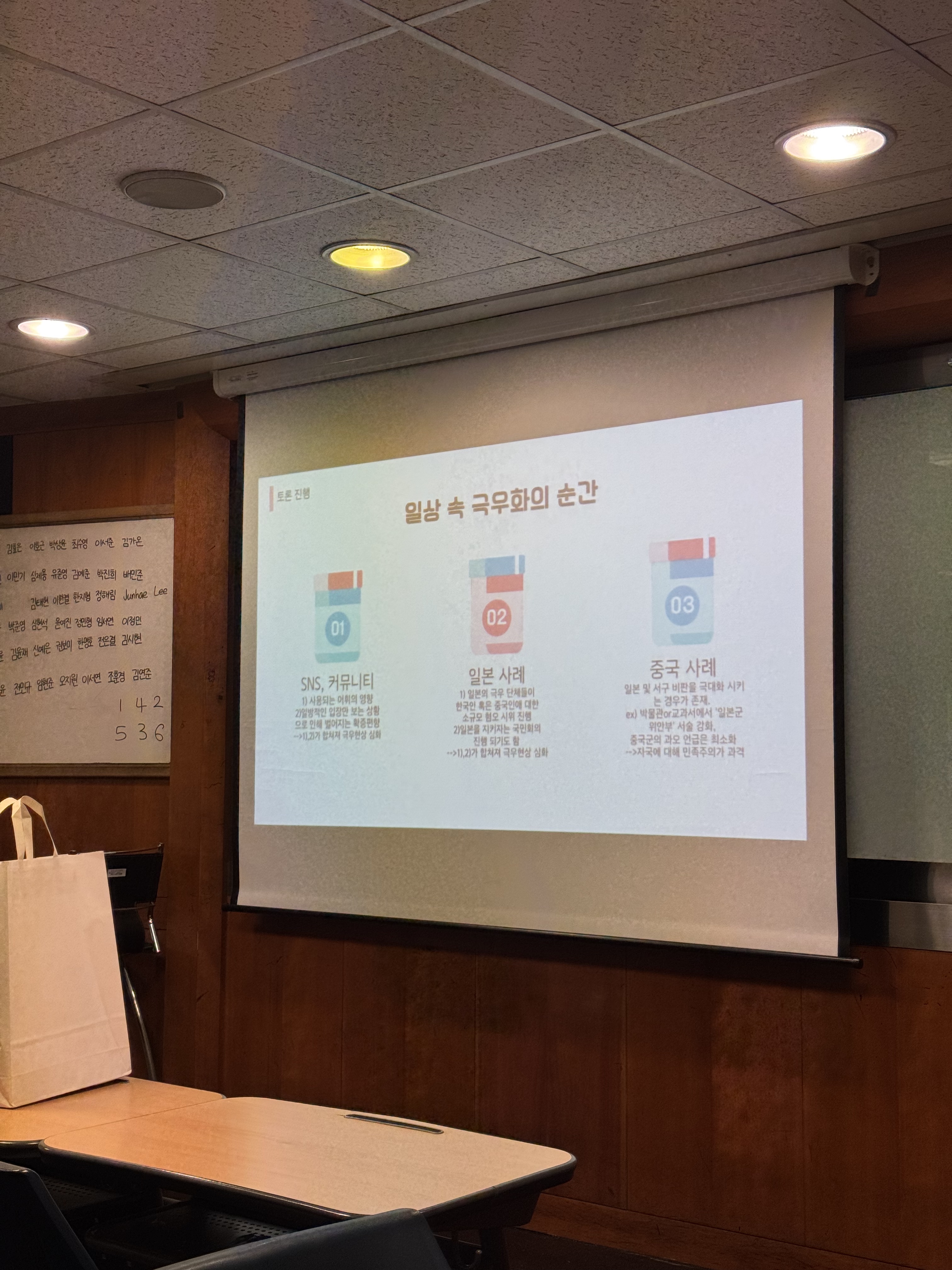
이후에는 토론시간이 진행되었습니다. 영국, 프랑스, 독일 중 한가지 나라를 정하고 그에 대한 극우화 처방 진단을 내리는 것이 활동 내용이었습니다.
한국 내에서도 만날 수 있는 일상 속 극우화 경험에 대해서 나눠보고 이를 타개하기 위해서는 어떤 마음가짐과 실천 혹은 정치 방향성이 필요한지에 대해 이야기를 나눠보는 시간을 가졌습니다.
정말 다양한 이야기들이 오갔습니다. 현재 한국에서 일어나는 극우 현상부터 유럽의 극우 정당이 성장할 수 있었던 이유와 배경, 여기에 필요한 해결방안 혹은 우리가 극우정당을 바라봐야 하는 방향성 등 너무 많은 이야기, 깊은 토론이 이어졌습니다.
After the lecture, we moved on to the discussion session. Each group was asked to choose one country — the UK, France, or Germany — and come up with a diagnosis and suggested response to the rise of far-right politics in that country.
We also took time to share our own experiences with far-right tendencies in everyday life, including those we encounter here in Korea. The discussion focused on what kind of mindset, actions, or political direction might be necessary to counter such trends.
A wide range of perspectives came up. From current far-right movements in Korea to the social and historical conditions that allowed far-right parties to grow in Europe, the conversations were deep and thought-provoking. We also explored different ways to approach, understand, or respond to these parties — whether through exclusion, engagement, or structural reform.

우리 조는 영국을 대상으로 처방전을 내렸습니다.
증상정도는 각각 매긴 점수를 평균내서 3점이 나왔습니다.
첫번째 약으로는 '문화편식 금지 맛'. 대영제국 시절, 식민지 통치를 통해 자신들에게 이득이 되는 나라의 문화를 강탈하고 지배한 역사를 가지고 있는 만큼, 영국의 극우정당이 현재 말하는 반이민자 정책에는 굉장한 모순이 있다고 봤다. 그래서 이슬람 문화를 혐오하는 극우정당에게 문화편식 금지맛 알약을 처방했습니다.
두번째로는 '최초의 의회를 상기시켜주는 흰색가발 맛'. 처음으로 의회를 만든 나라인 만큼 모두의 의견을 존중하고 이야기를 나누는 소통의 장을 만들라는 의미로 귀여운 이름의 알약을 처방했습니다.
마지막으로는 '세상을 구하려면 이불 정리 먼저 맛'. 사실 이런 거대한 사회 문제에 대해 이야기할 때마다 항상 거론되는 것이 바로 개인의 양심과 실천의 중요성이라고 생각합니다. 사실 저도 이런 토론을 하면서 드는 생각이 탁상공론은 아무것도 바꾸지 못한다는 것입니다. 토론의 장을 넓히고 지속적으로 이야기를 꺼내는 것은 그 자체로도 가치가 있지만, 직접적인 실천이 이어지지 않거나 실질적으로 사람들에게 그 영향이 끼치지 않으면 저는 실효성 없는 논의라는 생각이 듭니다.
그렇게 해서 저희 조는 세가지 약에 대해 처방을 내리고 갑작스러운 변화로 멀미나 메스꺼움 등 반발이 일어날 수도 있다는 부작용까지 설정해보았습니다.
Our group chose the UK as our case study and came up with a “prescription” to address the rise of far-right politics there.
After individually scoring the severity of the symptoms, we averaged the results and gave it a 3 out of 5.
The first pill we prescribed was called “No More Cultural Picky Eating.”
We saw a deep contradiction in far-right parties advocating anti-immigration policies, especially considering Britain’s colonial history of exploiting and dominating other cultures for its own gain. So we prescribed this pill to those who promote Islamophobia and cultural exclusion, as a reminder of the hypocrisy in rejecting cultures they once sought to control.
The second pill was the “White Wig of Parliamentary Remembrance.”
As the birthplace of modern parliament, the UK has a legacy of debate and inclusion. This cute-named pill is meant to remind people to respect diverse opinions and foster an open, communicative society.
Lastly, we prescribed the “Clean Your Room to Save the World” pill.
We often talk about big social problems, but it always comes back to personal action and conscience. During the discussion, I kept thinking: talk without action doesn’t change anything. While expanding these conversations is meaningful in itself, if it doesn’t lead to action or real impact, it risks becoming performative. This final pill emphasizes the importance of starting from within — doing the small things first before trying to change the world.
We even listed possible side effects, such as dizziness or nausea due to the sudden change, because, as we all agreed, real transformation can be uncomfortable.
마무리 Sum Up
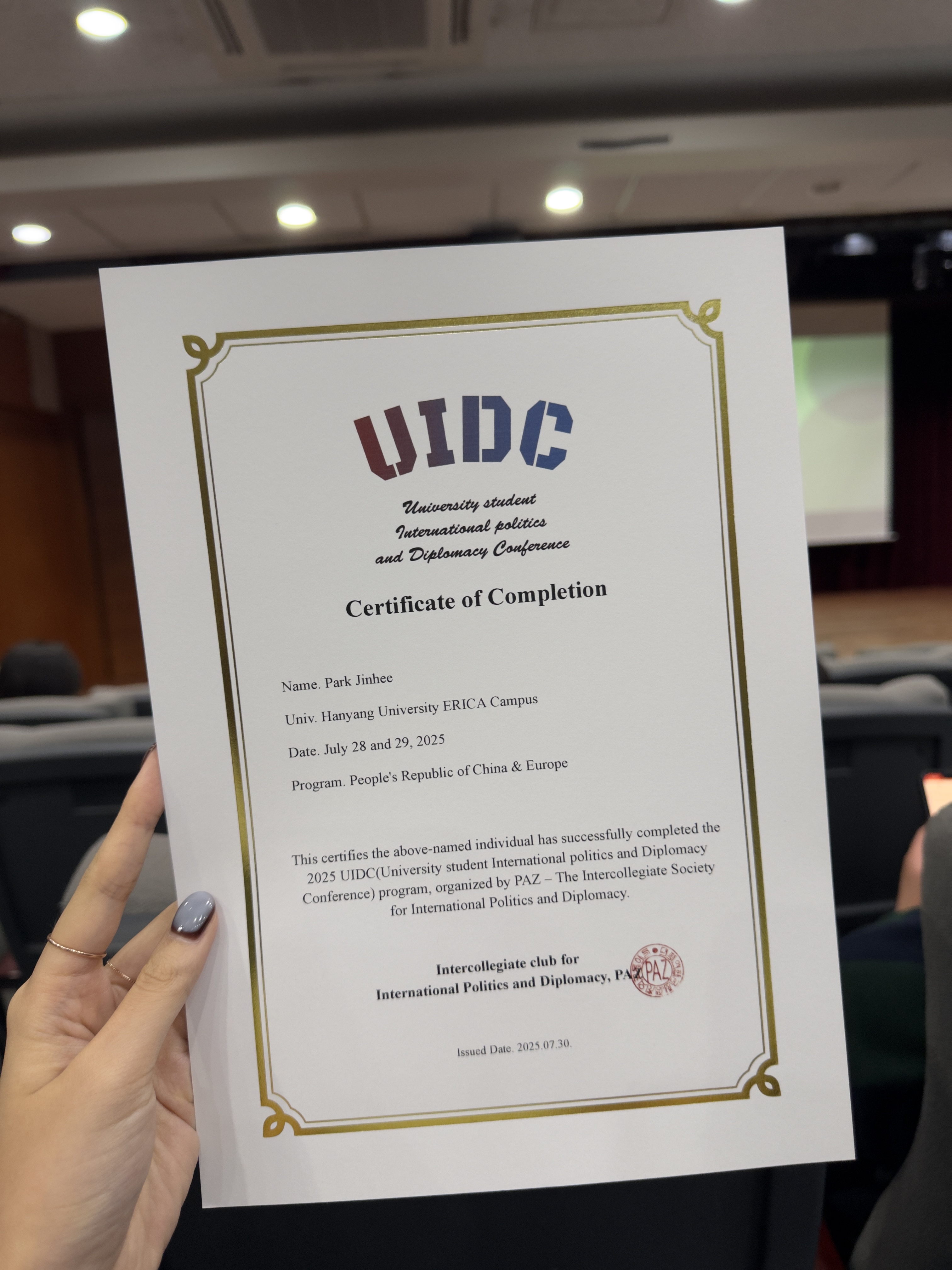
이번 기회를 통해 현재 한국에서 정치에 대해 고민하는 저와 같은 다른 대학생들을 만나고 연사님들의 수준 높은 강의를 듣는 기회를 가졌습니다. 대학생들 간의 정치적 이야기를 나누고 담론의 장에 함께 할 수 있다는 것이 뜻깊은 시간이었습니다. 스스로의 견해도 넓어지는 것을 느낄 수 있었습니다.
저는 토론을 굉장히 긍정하는 사람 중 한 명입니다. 사실 토론이라는 것이 가끔은 공격적이거나 소모적으로 느껴질 때도 있지만 그럼에도 불구하고 이야기를 나누고 이에 대한 해결방안을 찾아가는 노력이 중요하다고 생각합니다.
앞으로도 국제 정세와 사회적 이슈에 대해 꾸준한 관심을 기울이고 이를 협력적으로 해결해나가는 방안을 만들어가는 사람으로 성장하려 합니다!
Through this experience, I had the chance to meet other university students like myself who are thinking deeply about politics in Korea today, and to attend lectures from outstanding speakers. It was truly meaningful to share political dialogue with fellow students and take part in a broader discussion. I also felt my own perspective expand throughout the process.
I’m someone who strongly believes in the value of discussion. While debate can sometimes feel confrontational or exhausting, I believe it’s still important to engage in dialogue and search for solutions together.
Going forward, I hope to continue paying close attention to international affairs and social issues and to grow into someone who contributes to solving these challenges through collaboration and collective effort.
끝 The End
'Step by step' 카테고리의 다른 글
| 2025 대한민국 사회적 가치 페스타 참관 후기 | 2025 Korea Social Value Festa Review (2) | 2025.08.31 |
|---|
